




The shift toward circular packaging systems has moved from a voluntary corporate goal to a regulatory mandate. Across global supply chains, secondary packaging plays a major role in shipping safety and product protection. While corrugated cartons are highly recyclable, the tape used to seal them often dictates whether the entire package can be successfully repulped. Traditional plastic pressure-sensitive tapes create significant challenges at recycling facilities, leading to contamination and equipment downtime. Adopting recyclabel kraft tape offers a reliable path to improving the recycling efficiency of shipping cartons. Youyi manufactures paper-based adhesive products designed to bridge the gap between high-strength carton closure and end-of-life recyclability. By analyzing the material science and operational integration of these products, procurement professionals can make informed sourcing decisions that balance economic performance with environmental stewardship.
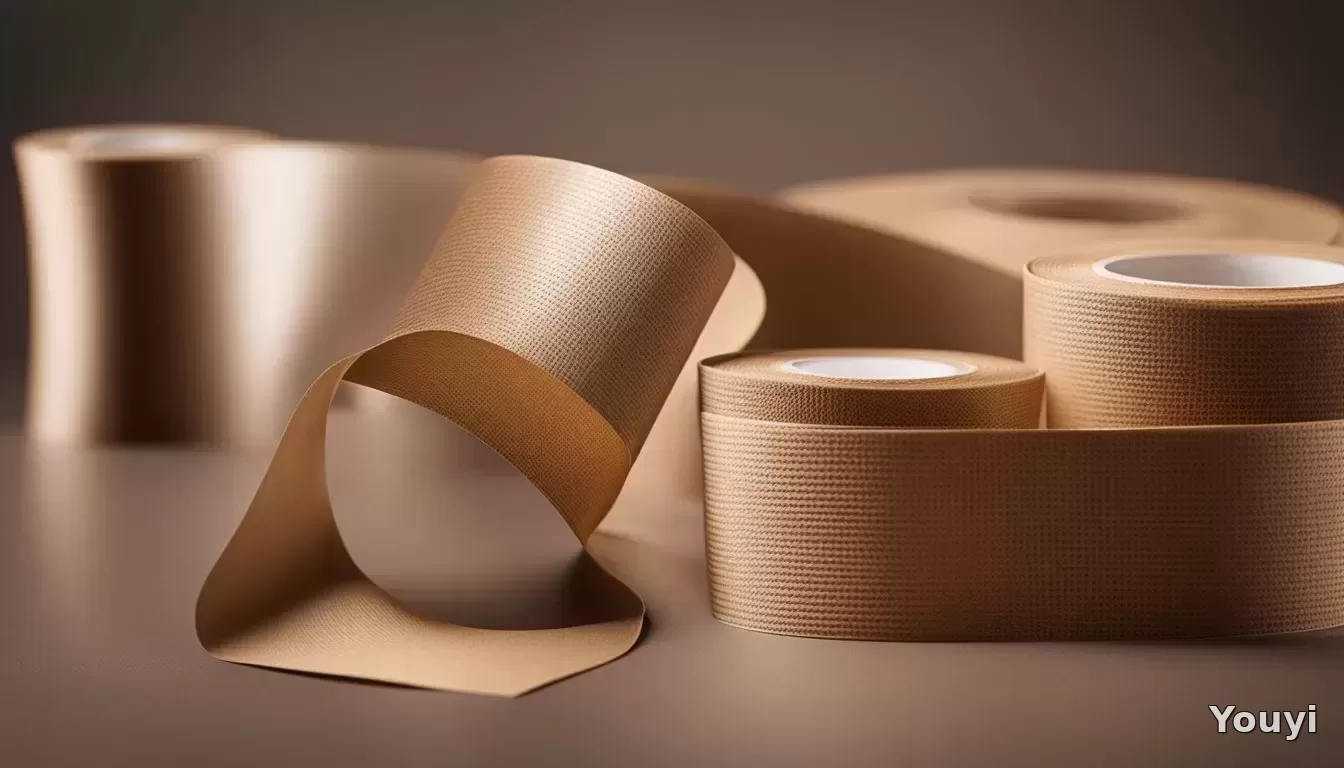
Chemical and Material Composition of Recyclabel Kraft Tape
To understand how paper-based tapes perform, one must analyze their raw materials. The backing material is typically made from unbleached kraft paper, which utilizes long softwood fibers. These fibers, derived from the chemical kraft pulping process, retain their structural integrity far better than recycled fibers, which have been shortened by repeated processing. The weight of this backing usually ranges from 50 grams per square meter (GSM) to 90 GSM, depending on the intended weight capacity of the shipping container. High-purity kraft fibers provide high tensile strength and puncture resistance, which are necessary to withstand the physical forces experienced during sorting, transit, and palletization.
The choice of adhesive is equally important to the performance of recyclabel kraft tape. Two primary adhesive systems exist in the market, each serving distinct operational demands:
Water-Activated Adhesives: Typically formulated from natural potato or cornstarch. This adhesive layer remains completely dry and inactive until it is moistened at the point of application. Once wet, the starch adhesive penetrates deep into the porous fibers of the corrugated carton. As the water evaporates, the adhesive and the carton fibers interlock, creating a structural bond that becomes part of the box itself.
Pressure-Sensitive Adhesives: Formulated using solvent-free acrylic polymers or natural rubber. These formulations are engineered to offer immediate grab upon contact without requiring water. To ensure the tape remains compatible with recycling facilities, the adhesive layer is designed to retain its cohesion, preventing it from breaking down into sticky micro-particles that contaminate paper mills.
By matching the correct paper weight with the appropriate adhesive system, procurement officers can secure packaging that matches the mechanical performance of polypropylene options while supporting recycling efforts.
How Recyclabel Kraft Tape Behaves During Paper Pulping
Understanding the chemical composition of the tape is only the first step. To fully evaluate its environmental impact, one must examine how these components behave during the recycling process. A common point of confusion in the packaging industry is the distinction between biodegradable, compostable, and repulpable materials. When evaluating recyclabel kraft tape, repulpability is the primary metric of interest. Repulpability refers to a material's ability to be broken down into individual fibers in a hydrapulper, which can then be reformed into new paper products. This is the foundation of the circular economy for corrugated cardboard.
During the standard recycling process, old corrugated containers (OCC) are mixed with warm water and agitated under high shear in a large pulper. This process turns the paper back into a slurry of fibers. Standard plastic packaging tapes do not dissolve or break down in this environment. Instead, they shred into smaller pieces that clog fine screens or form tacky agglomerations known in the industry as "stickies." These stickies can deposit on paper machine felts and drying cylinders, causing sheet breaks and product defects.
High-performance recyclabel kraft tape avoids these issues completely. The starch adhesive on water-activated paper tape dissolves completely in the warm water bath, leaving no sticky residues. The kraft paper backing decomposes into high-quality softwood fibers that actually enrich the recycled pulp mixture. When pressure-sensitive paper tape is used, the adhesive formulation is designed to maintain its cohesion, allowing the adhesive layer to stay intact as a large, non-tacky film that is easily filtered out by primary screens.
Mechanical Strength and Performance Ratings
While environmental compatibility is a major priority, packaging materials must also fulfill their primary function: securing cargo during transit. This requires a close look at the mechanical properties and performance ratings of paper-based adhesives. Modern paper tapes are engineered to meet specific load requirements, categorized by their structural reinforcement.
Non-reinforced recyclabel kraft tape relies entirely on the inherent strength of the kraft paper fibers. This type of tape is suitable for light to medium-weight cartons, typically up to 15 kilograms. It is highly valued for its clean appearance and complete ease of recycling, as it contains no secondary materials.
For heavier shipments exceeding 20 kilograms, reinforced recyclabel kraft tape is often deployed. This tape incorporates a layer of fiberglass or polyester yarns sandwiched between two layers of paper. The multi-directional yarns provide excellent resistance to bursting and tearing. To meet these varying needs, Youyi provides both varieties, allowing packaging engineers to choose the exact level of support required for their cargo configurations.
To illustrate the performance differences, let us examine the typical mechanical specifications of standard paper-based sealing products:
Standard Light-Duty (60 GSM): Tensile strength of approximately 40 lbs/inch in the machine direction. Best suited for small cartons with low-impact shipping paths.
Medium-Duty (75 GSM): Tensile strength of 50 lbs/inch. Suitable for standard consumer goods shipping up to 15 kg.
Heavy-Duty Non-Reinforced (90 GSM): Tensile strength of 60 lbs/inch. Provides high-burst resistance without the use of synthetic reinforcement fibers.
Reinforced Utility Tape: High-tensile reinforcement grid, offering over 75 lbs/inch of tensile resistance. Designed for heavy export cartons and high-value cargo.
Operational Integration and Troubleshooting in Warehouses
Selecting a tape with the correct mechanical ratings is only effective if the material can be applied efficiently in a real-world warehouse environment. Integrating a new material into an existing packaging line requires careful operational planning. Moving from handheld plastic tape dispensers to paper-based systems often changes the workflow of warehouse personnel.
Applying pressure-sensitive paper tape is relatively straightforward, as it can be used with traditional manual dispensers. However, water-activated recyclabel kraft tape requires dedicated dispensing equipment. These dispensers can range from simple manual water-brush units to high-speed electric machines that cut the tape to precise lengths and apply a controlled amount of water.
While the initial investment in electric dispensers is higher, the operational payback is realized through increased packing speeds and reduced material waste. Unlike plastic tape, which operators often wrap around a box multiple times to ensure security, a single strip of water-activated tape is sufficient to seal a carton. The permanent bond acts as a tamper-evident seal; any attempt to open the carton tears the box fibers, revealing the breach immediately.
Temperature sensitivity is another operational factor. In cold storage environments or during extreme summer shipping, rubber-based adhesives on plastic tapes can lose their hold. Water-activated starch adhesives, once cured, form a physical lock with the box fibers that remains unaffected by temperature fluctuations from -20°C to over 50°C.
To ensure a seamless transition, warehouses should address the following operational factors:
Water Temperature: Starch-based adhesives activate most efficiently when the dispensing water is between 20°C and 35°C. In unheated warehouses during winter, using dispensers with built-in water heaters ensures reliable adhesion.
Wiper Tension: On electric dispensers, the brushes that apply water to the tape must be clean and properly weighted to distribute water evenly across the entire adhesive surface.
Carton Dust: High levels of dust on recycled corrugated boxes can interfere with standard pressure-sensitive adhesives. Water-activated recyclabel kraft tape is less sensitive to dust because the liquid adhesive wet-out process actively penetrates through surface dust to bond directly with the underlying paper fibers.
Quality Control and Laboratory Testing of Paper Sealing Tapes
Ensuring operational efficiency inside the warehouse must be matched by a rigorous quality control program that verifies tape performance before it ever reaches a carton. To guarantee performance on automated lines, paper packaging materials undergo standardized testing procedures that procurement departments should familiarize themselves with to evaluate tape quality objectively.
Fipago Adhesion Testing: This is the industry standard test for water-activated tape. It measures the tack development of the wet starch adhesive. The test evaluates how quickly the adhesive bonds to the corrugated board within the first few seconds of application. A high Fipago rating indicates fast tack, which is vital for high-speed automated carton sealers.
Tensile Strength and Elongation (ASTM D3759): This test measures the force required to break a strip of tape. It is performed in both the machine direction (MD) and cross-direction (CD). High elongation values allow the tape to stretch slightly under pressure rather than snap, absorbing shocks during transit.
Peel Adhesion (ASTM D3330): For pressure-sensitive paper tapes, this test measures the force required to remove the tape from a standard stainless steel plate or a representative corrugated cardboard surface at a specified angle and speed.
Shear Resistance (ASTM D3654M): This measures the ability of pressure-sensitive adhesive to resist continuous sliding forces. High shear resistance ensures that the tape flaps do not slowly slide open under the internal tension of a bulging box.
Understanding these testing parameters allows packaging engineers to establish clear quality standards with suppliers. Youyi maintains strict laboratory testing for every batch of recyclabel kraft tape, ensuring that the physical properties remain consistent from run to run.
Global Regulatory Compliance and Financial Impact
Beyond physical performance and quality testing, the shift toward paper-based carton sealing is heavily driven by the changing regulatory environment. Environmental regulations are increasingly dictating packaging material choices. Many jurisdictions are implementing Extended Producer Responsibility (EPR) regulations, which impose financial penalties on businesses that use non-recyclable or hard-to-recycle packaging components. By utilizing recyclabel kraft tape, manufacturers can avoid these surcharges and demonstrate compliance with international environmental directives.
From a logistical perspective, shipping cartons that are fully clean of plastic tape are more valuable to recyclers, sometimes commanding higher rebate prices for large-scale distribution centers that bale and sell their post-industrial waste.
From a brand perspective, clean, uniform paper packaging improves the unboxing experience. The absence of unsightly plastic tape aligns with modern consumer expectations of sustainability, presenting a cohesive brand image from the moment the package arrives.
When calculating the total cost of ownership, procurement teams must look beyond the initial price per roll. While the per-meter cost of paper tape may exceed that of low-grade polypropylene tape, the savings are realized through several factors:
Reduced Tape Consumption: Operators typically use only one strip of recyclabel kraft tape per seal, compared to multiple overlapping strips of plastic tape.
Lower Product Damage and Theft: The tamper-evident bond prevents quiet pilferage during transit, reducing insurance claims and product replacement costs.
Decreased Waste Management Fees: Eliminating mixed-material packaging lowers waste sorting labor and disposal costs within the fulfillment facility.
Frequently Asked Questions
Q1: Can recyclabel kraft tape be recycled along with the corrugated box?
A1: Yes, high-quality recyclabel kraft tape is designed to be left on the box during the recycling process. The paper backing repulps along with the cardboard, and the water-soluble starch adhesive dissolves in the pulper without creating harmful residues.
Q2: What is the difference between reinforced and non-reinforced kraft tape regarding recyclability?
A2: Non-reinforced paper tape is completely recyclable and biodegradable because it consists solely of paper and starch adhesive. Reinforced paper tape contains fiberglass threads for extra tensile strength; while the paper part is recyclable, the fiberglass must be screened out during the pulping stage.
Q3: How does temperature affect the performance of water-activated paper tape?
A3: Once the starch adhesive cures, it forms a permanent bond with the corrugated fibers that remains stable in both extreme heat and freezing conditions. However, during application, the water used to activate the tape should be kept at room temperature or slightly warmed in cold environments to ensure proper activation.
Q4: Can this tape be printed with custom logos using eco-friendly inks?
A4: Yes, Youyi provides custom printing options using water-based inks. These inks do not interfere with the repulping process, allowing businesses to maintain their branding while ensuring the packaging remains fully recyclable.
Q5: What is the shelf life of recyclabel kraft tape under standard warehouse conditions?
A5: When stored in a cool, dry place away from direct sunlight and high humidity, water-activated kraft tape has an almost indefinite shelf life, as the adhesive remains dormant until moistened. Pressure-sensitive kraft tape typically has a shelf life of 12 to 18 months.
Inquiry and Custom Procurement Support
When selecting recyclabel kraft tape for your packaging lines, working with an experienced manufacturer like Youyi ensures consistent performance and compliance with international standards. Our team can assist in selecting the appropriate paper weight, adhesive formulation, and dispensing solutions for your specific application. To request physical samples for laboratory testing, or to obtain wholesale pricing options for bulk container shipments, please send your detailed specifications to our sales department today. We look forward to supporting your transition to efficient, circular packaging solutions.