




Direct thermal labeling is an indispensable technology across modern logistics, clinical sample tracking, pharmaceutical packaging, retail point-of-sale, and cold-chain distribution. However, the chemical formulation of thermal facestocks has faced intense scrutiny over the last decade. Traditional direct thermal coatings historically depended on Bisphenol A (BPA) as an acidic developer to react with leuco dyes under heat exposure. As toxicological research exposed the health and environmental risks of endocrine-disrupting chemicals, industrial demand shifted decisively toward safer, non-phenolic alternatives.
Specifying a genuine bpa free coated paper label is no longer just a superficial branding choice; it is an engineering and compliance imperative. Industrial converters, supply chain directors, and compliance managers must understand the surface chemistry, mechanical performance, regulatory requirements, and substrate construction that define modern bisphenol-free thermal label stock.
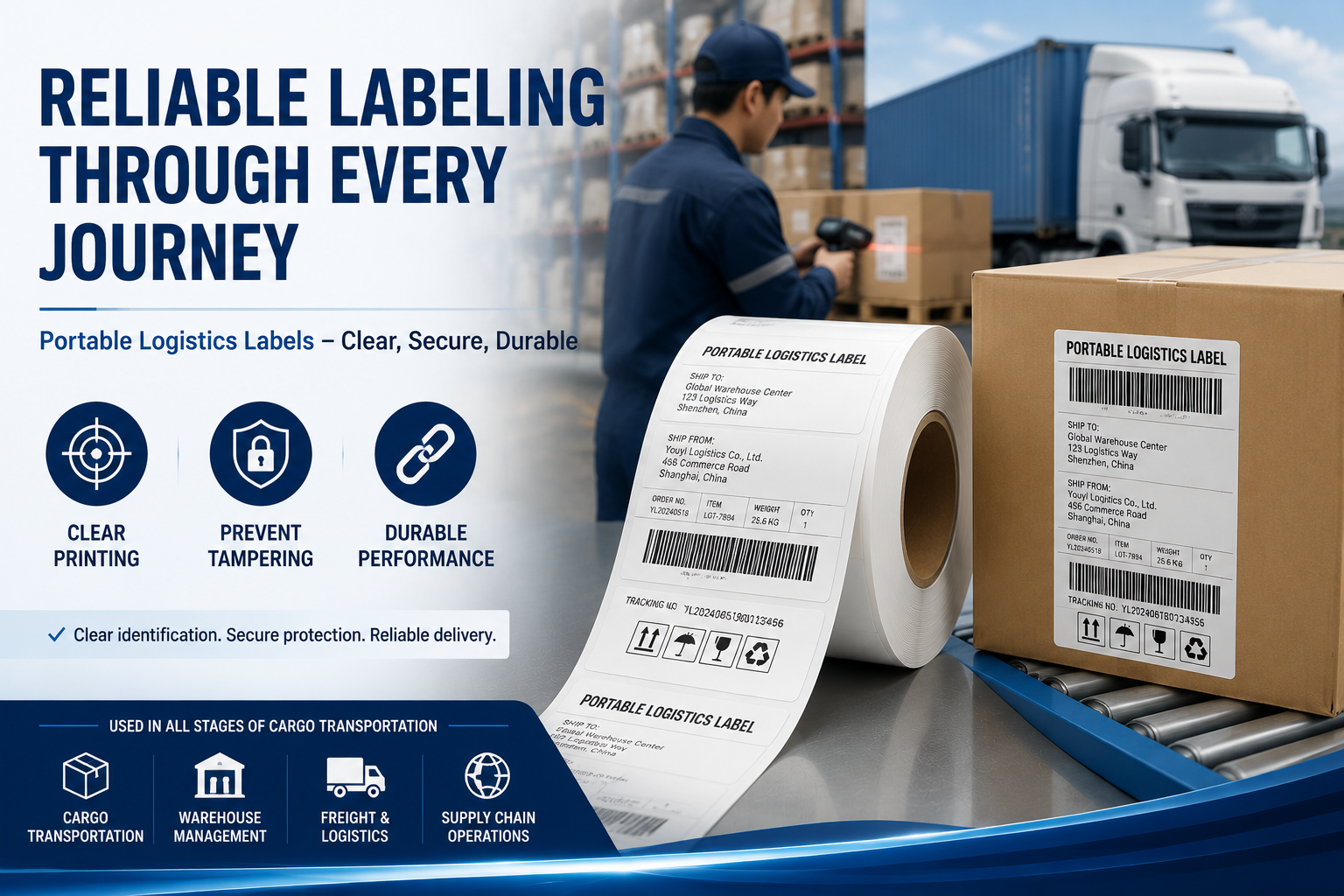
The Chemical Architecture of a BPA Free Coated Paper Label
Understanding how a thermal label functions without bisphenols requires looking at the micro-layered structure of direct thermal paper. Unlike thermal transfer materials that rely on an inked ribbon, direct thermal labels embed the entire imaging chemistry inside the substrate coating.
A standard high-performance bpa free coated paper label is engineered with four distinct functional layers:
The Protective Topcoat: A cured synthetic or water-based polymer barrier that protects the reactive chemistry from mechanical scuffing, water, fats, oils, alcohol, plasticizers, and ambient humidity.
The Thermal Active Layer: A precision-coated layer containing colorless leuco dye precursors, alternative non-BPA color developers, and sensitizers suspended in a specialized binder matrix.
The Thermal Undercoat (Pre-Coat): A microscopic insulating layer applied directly to the raw paper stock. It prevents heat from dissipating into the base sheet, directing the thermal energy from the printhead outward to ensure sharp edge acuity and maximum optical density.
The Base Paper & Adhesive Complex: High-tensile, uniform caliper paper stock paired with industrial-grade emulsion acrylic or hot-melt adhesive, backed by a silicone-treated glassine or kraft release liner.
Alternative Color Developers: Beyond Bisphenol A
When printheads apply heat (typically between 80°C and 120°C), the sensitizer melts, allowing the leuco dye (often fluoran-based) and the acidic developer to fuse. This chemical reaction opens the lactone ring of the leuco dye, changing its molecular structure from colorless to an intense black or dark blue image.
To eliminate BPA from this process, chemical manufacturers formulate base coatings using non-toxic developer compounds:
Sulfonylurea Derivatives (e.g., Pergafast 201): Non-phenolic chemical developers that deliver high image stability, heat resistance, and long archival life without showing estrogenic or endocrine-disrupting activity.
Zinc Salicylate & Urea-Based Complexes: Advanced non-phenol developer systems engineered for rapid chemical reactivity, preventing printhead residue buildup while meeting stringent food-contact parameters.
Long-Chain Phenolic Alternatives (BPS): While some manufacturers replaced BPA with Bisphenol S (BPS), true high-spec safety standards increasingly require totally phenol-free chemistry, as BPS shares similar structural characteristics with BPA.
Why Industrial Operations Are Eliminating Phenol-Based Facestocks
The transition to bisphenol-free labeling is driven by occupational health data, consumer protection rules, and environmental recycling requirements.
1. Mitigating Transdermal Absorption Risks
Unlike bonded polymers in rigid plastics, chemical developers in direct thermal coatings exist in a free, unpolymerized state across the paper surface. When warehouse operators, laboratory technicians, or cashiers handle labels, free bisphenols readily transfer to the skin.
Dermal absorption increases significantly when handling occurs after using alcohol-based hand sanitizers, lotions, or industrial cleaning solvents. Hand sanitizers act as skin penetration enhancers, increasing the transdermal migration of free phenols into the bloodstream up to a hundredfold. Deploying a verified bpa free coated paper label protects frontline personnel throughout daily handling workflows.
2. Preventing Migration in Food Packaging & Medical Samples
In supermarket weighing scales, direct food labeling, and cold-chain meat packaging, chemical compounds can migrate through thin plastic packaging films into food items. Similarly, in clinical diagnostics, migrating chemical developers can compromise the integrity of low-density polyethylene (LDPE) test vials and biological sample tubes. Non-BPA, topcoated label stocks prevent chemical leaching, ensuring sample and product safety.
3. Circular Economy and Recyclability Integrity
Thermal labels often enter post-consumer waste streams stuck to corrugated boxes, shipping envelopes, and paper packaging. When thermal paper containing BPA is recycled, the chemical contaminates the industrial water loop and becomes incorporated into recycled paper towels, food containers, and cardboard. Specifying clean developer chemistry protects waste streams from toxic contamination.
Global Regulatory Frameworks and Compliance Mandates
Industrial procurement teams must navigate complex international regulations when sourcing thermal label consumables. Using non-compliant chemical developers risks legal penalties, product recalls, and customs rejections.
European Union REACH Annex XVII (Regulation EU 2016/2235): Formally prohibits placing thermal paper on the EU market with a BPA concentration equal to or greater than 0.02% by weight. European supply chains increasingly treat all bisphenols, including BPS, with identical restrictions under ongoing ECHA reviews.
California Proposition 65: Bisphenol A is designated as a reproductive toxicant under Safe Drinking Water and Toxic Enforcement Act listings. Products exhibiting dermal transfer above established Safe Harbor / Maximum Allowable Dose Levels (MADL) require strict consumer warning labels unless formulated with verified bisphenol-free chemistries.
FDA 21 CFR 175.105 & 176.170: Governs adhesives and paper components in direct and indirect contact with food. Label facestocks and functional barriers must demonstrate zero toxic chemical migration into fatty or aqueous food substrates.
Substrate Engineering: Topcoated vs. Non-Topcoated BPA-Free Labels
Specifying a bpa free coated paper label requires matching the topcoat chemistry to the mechanical stresses of the target environment.
Non-Topcoated Direct Thermal (Economy Facestock)
Non-topcoated papers apply the heat-sensitive layer directly onto the undercoated base paper without an external protective barrier. While cost-effective for short-term indoor logistics, retail receipts, and quick-turn cross-docking labels (operating lifespan under 30 days), they remain vulnerable to surface friction, plasticizer migration from PVC films, moisture, and ultraviolet light exposure.
Topcoated Direct Thermal (Premium Industrial Facestock)
For demanding environments, topcoated direct thermal paper features an engineered polymeric barrier over the active thermal layer. This protective barrier provides vital performance characteristics:
Chemical and Plasticizer Resistance: Prevents the thermal image from fading or turning completely black when exposed to wrap films, fats, oil, grease, or fuel spills.
Moisture & Condensation Durability: Maintains scan integrity and bar code readability across cold storage (-20°C to -40°C deep-freeze environments) and variable humidity warehouses.
Printhead Wear Reduction: The smooth surface profile reduces friction against the thermal printhead elements, minimizing dynamic thermal printhead abrasion and extending hardware service life.
Comparing Direct Thermal and Thermal Transfer Label Technologies
To choose the right material, engineers must weigh direct thermal BPA-free papers against thermal transfer alternatives across four key criteria:
Consumable Architecture: Direct thermal BPA-free labels require no ink ribbon, running on a single roll supply. Thermal transfer requires matching coated facestock with appropriate wax, wax-resin, or pure resin ribbons.
Image Durability: Premium topcoated BPA-free direct thermal resists fading for 1 to 5 years under standard archival conditions. Thermal transfer resists UV degradation, harsh industrial solvents, and exterior weathering for up to 10+ years.
Application Fit: BPA-free direct thermal excels in fast-moving supply chains, shipping labels, pharmaceutical tracking, and retail scales. Thermal transfer is preferred for chemical drum identification (GHS compliance), asset tracking tags, and high-heat automotive assemblies.
Operating Efficiency: BPA-free direct thermal eliminates the downtime needed to change matched ribbons and simplifies operator workflows, yielding high throughput in high-velocity sortation hubs.
Quality Verification: Auditing Your Label Converter
Not all label rolls marked "BPA-Free" deliver equal protection. Procurement and quality assurance teams should use a thorough verification process when auditing industrial label suppliers:
High-Performance Liquid Chromatography (HPLC) & GC-MS Testing: Require verifiable, third-party laboratory test reports that confirm developer concentrations. True high-spec labels must show non-detectable levels for both BPA and BPS at parts-per-million (ppm) thresholds.
Comprehensive Safety Data Sheets (SDS): Inspect Section 3 (Composition/Information on Ingredients) to ensure manufacturers have not merely substituted BPA with BPS, BPF, or other toxic alternatives.
Dynamic Sensitivity Profiling: Verify that the alternative developer provides the same optical density (target >1.30 O.D.) at standard printhead energy settings (mJ/mm²), ensuring high-speed barcode scanning without needing slower print speeds.
Industrial Manufacturing Standards with Youyi
Producing reliable, compliant, and structurally sound label facestock requires advanced coating equipment and rigorous raw material selection. As an established manufacturing partner in self-adhesive material engineering, Youyi provides commercial converters and enterprise buyers with world-class direct thermal label materials.
Youyi manufactures topcoated and uncoated bpa free coated paper label master jumbo rolls, slit rolls, and custom die-cut solutions designed for modern enterprise workflows:
High-Performance Developer Formulations: Utilizing verified non-phenol and non-BPA color developer chemistry that exceeds EU REACH and California Prop 65 safety requirements.
Advanced Precision Coating Lines: Multi-station thermal coating machinery ensures uniform layer thickness, consistent heat transfer sensitivity, and superior optical scan rates across all thermal printers.
High-Strength Emulsion Adhesives: Paired with solventless hot-melt or permanent emulsion acrylic adhesives that deliver dependable tack across corrugated surfaces, polybags, cold glass, and industrial plastics.
End-to-End Quality Traceability: Every production master roll undergoes strict batch testing, release-force calibration, and optical density certification before slitting and dispatch.
Frequently Asked Questions
What is the difference between a BPA-free label and a phenol-free label?
A "BPA-free" label does not contain Bisphenol A, but it may still utilize Bisphenol S (BPS) or Bisphenol F (BPF) as developers. A "phenol-free" label completely eliminates all bisphenols and phenolic compounds, using safer non-phenolic developer alternatives like sulfonylureas or zinc complexes. Phenol-free represents the highest safety standard for direct thermal paper.
Can a BPA-free coated paper label achieve the same print speed and contrast?
Yes. Advanced non-BPA color developers and sensitizers are engineered to match or exceed the dynamic sensitivity of traditional coatings. They trigger sharp color reactions within standard thermal printhead temperatures (80°C to 120°C), achieving deep optical densities (>1.30 O.D.) at high industrial print speeds up to 12-14 inches per second.
How can procurement teams verify a label facestock is genuinely BPA-free?
Procurement teams should avoid relying solely on marketing claims. Request a current Certificate of Analysis (CoA), a complete Material Safety Data Sheet (MSDS/SDS), and third-party analytical laboratory verification using High-Performance Liquid Chromatography (HPLC) or Gas Chromatography-Mass Spectrometry (GC-MS) testing.
Are BPA-free coated paper labels safe for indirect food contact?
Yes, provided the facestock and adhesive comply with FDA 21 CFR 175.105 (adhesives) and applicable food packaging migration thresholds. High-grade topcoated formulations prevent developer chemicals from migrating through secondary packaging films onto food items.
Do BPA-free coatings affect the service life of thermal printheads?
No. High-quality bisphenol-free coatings are designed with precise abrasive parameters and thermal lubrication agents. A properly topcoated BPA-free label reduces friction and thermal residue accumulation, maintaining or extending the service life of ceramic printhead heating elements.
Secure Your Supply Chain with Compliant Labeling Materials
Upgrading your labeling infrastructure to safe, sustainable, and high-clarity direct thermal materials is essential for managing compliance risk and maintaining reliable operational throughput. Whether you are converting millions of logistics labels, deploying clinical barcode systems, or scaling automated retail packaging, working with a qualified manufacturer ensures zero chemical compromises.
Contact the materials engineering team at Youyi today to request technical data sheets, order evaluation sample rolls, or receive a competitive wholesale quote on certified bpa free coated paper label master rolls and custom slit formats.