




Your automated packing line runs at full speed. Suddenly, a sharp snap rings out across the warehouse floor. The wrapper turntable keeps spinning, but the film tail flaps uselessly in the air, triggering an emergency stop.
Every packaging manager knows this headache. Operators rush over, re-thread the carriage, and restart the cycle. On paper, it looks like a simple two-minute delay.
In reality, recurring film snaps cost businesses thousands of dollars each month in downtime, wasted plastic, and dropped cargo. Even worse, film failures during transit ruin the custom printed tape you paid good money to showcase.
If you face daily pallet wrapping issues, it is time to audit your packaging line. Youyi supplies industrial packaging operations worldwide with dependable materials designed to run smoothly. Send an inquiry to Youyi today to diagnose your line performance and sample our high-yield materials.
Introduction: The Cost of a Snapped Film (It’s More Than Just Downtime)
When a roll snaps, the immediate reaction is to curse the machine or blame the operator. Plant managers usually calculate the loss in terms of labor hours and scrap plastic. Those numbers add up quickly across two or three shifts.
However, the real financial hemorrhage happens when the film does not break in the warehouse, but fails halfway through shipping. A partial tear under the wrap allows the pallet to shift, tilt, and crush neighboring cartons.
Think about your brand's presence on that pallet. You invested in custom printed tape to project professionalism, prevent tampering, and highlight your corporate identity. When your pallet load containment fails, that branding message collapses instantly.
A torn outer wrap lets road grit, moisture, and warehouse soot stick to the boxes. The custom logo on your carton tape arrives smudged, torn, or hidden beneath layers of haphazard hand-wrap applied by a frustrated truck driver. This guide breaks down why your machine LLDPE stretch film snaps and shows you how to protect both your load and your brand reputation.
Top 4 Technical Reasons Your Machine LLDPE Stretch Film Keeps Breaking
Linear Low-Density Polyethylene (LLDPE) is engineered for exceptional elongation and tensile strength. When it snaps consistently on a stretch wrapping machine, a specific mechanical or material mismatch is almost always to blame.
1. Incorrect Pre-Stretch Ratio Settings
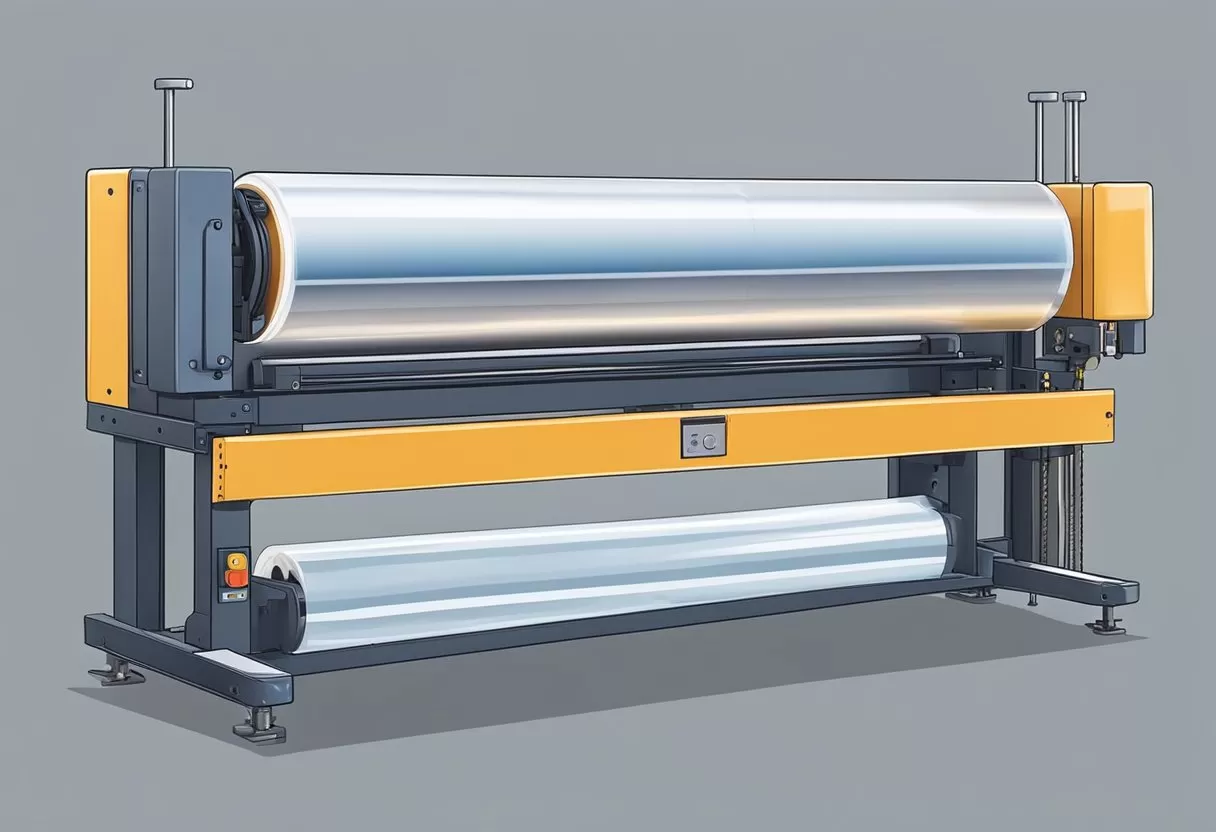
Modern pallet wrapping machines use powered pre-stretch carriages. Two rollers turning at different speeds stretch the film mechanically before it ever touches the load. This process expands the film to its yield point, giving it holding force while reducing consumption.
Trouble starts when the machine's gear ratio exceeds the material's structural limits:
- Running a standard 150% to 200% elongation film on a machine geared for 250% or 300% pre-stretch will snap the film instantly.
- When film stretches past its ultimate tensile strength, neckdown occurs too quickly, thinning the web until it tears down the center.
- Over-stretching also spikes the tension between the carriage and the pallet, pulling the film too hard across the pallet corners.
You must match the film grade directly to your machine carriage ratio. Running high-performance film on low-geared machines wastes money, while running commodity film on high-ratio machines guarantees continuous breakage.
2. Film Quality and Resin Formulation
Not all LLDPE resins perform the same way under dynamic mechanical stress. The chemical backbone of the polymer determines how much punishment it can take before snapping.
Low-grade stretch film often contains excessive recycled content or lower-tier butene (C4) resins. These films lack uniform molecular chains, leading to structural micro-voids that tear open under tension. Premium films use hexene (C6), octene (C8), or metallocene catalysts to create uniform, tightly bound polymer networks with superior puncture resistance.
The manufacturing process also plays a massive role:
- Cast Stretch Film: Produced by feeding molten resin over chilled rollers. It offers high clarity, quiet unwind, and consistent gauge control, but lower tear resistance once punctured.
- Blown Stretch Film: Created by blowing a bubble of resin upward. It offers unmatched puncture resistance and bi-directional tear strength, making it ideal for jagged, heavy loads, though it runs noisier and hazier.
If your cast film tears the moment a tiny nick appears, your resin formula lacks the puncture-propagation resistance required for your specific pallet profile.
3. Sharp Edges and Pallet Load Profile
Machine film rarely snaps in thin air. In most cases, a sharp corner punctures the film, and the high wrapping tension turns that tiny puncture into a catastrophic tear across the entire web.
Look at your load profiles to identify these common culprits:
- Rough wooden pallet corners with exposed nails or jagged splinters.
- Stiff corrugated box edges with sharp 90-degree overhangs.
- Uneven, stepped pallet patterns where box corners poke out past the primary load face.
- Rigid metal components, drums, or plastic crates stacked without edge protectors.
When the wrapper pulls film tight against a sharp protrusion, point-stress concentrates on a single millimeter of plastic. If the film cannot deform around that edge, it ruptures instantly.
4. Operator Errors and Temperature Fluctuations
Even the highest quality machine LLDPE stretch film fails if operators handle the rolls carelessly. Polyethylene rolls are wound under tension; their edges are sensitive to mechanical impacts.
If an operator drops a roll or bumps it against a forklift fork, the roll edge sustains microscopic nicks. As the machine unrolls the film at high speed, that tiny edge cut creates an immediate weak point. The web tears across the roll within seconds of starting the cycle.
Storage conditions also alter film mechanics:
- Cold Warehouses: Storing film in unheated winter facilities stiffens the LLDPE chains, drastically reducing elasticity and puncture resistance.
- Excessive Heat: Storing rolls next to boilers or in hot summer trailers causes the film layers to fuse slightly, causing uneven unwind tension and snaps.
The Hidden Impact: How Film Failure Destroys Your Custom Tape Branding
Many procurement teams separate stretch wrap from box sealing tape. They purchase custom tape to improve customer experience, while treating machine LLDPE stretch film as a generic commodity. This disconnected mindset costs businesses money and brand equity.
The "Unboxing" Starts on the Pallet
In B2B commerce, the customer experience does not start when someone cuts open a small cardboard box with a utility knife. It begins on the receiving dock. Your pallet arrives in front of warehouse managers, procurement agents, and receiving clerks.
A well-wrapped pallet with clear, sparkling film highlights your crisp, custom branded carton tape beneath it. It signals quality control, security, and pride in manufacturing. Conversely, a snapped, patched, or loose wrap makes the shipment look amateurish before the customer even checks the packing slip.
Friction, Residue, and Distortion
When machine LLDPE stretch film breaks or loses its containment force, the outer plastic layers go slack. During long-haul transport, road vibration causes the loose film to rub continuously against the carton surfaces.
This persistent friction creates several damaging side effects:
- It scuffs the face of custom printed tape, scratching away printed logos, brand colors, and handling instructions.
- Poor quality stretch cling additives can migrate onto the tape, leaving a hazy, sticky residue that makes boxes look dirty.
- Shifting boxes stretch the tape past its shear limit, causing carton flaps to pop open and display wrinkled, distorted branding.
At Youyi, our manufacturing standards ensure our stretch films maintain stable holding force without adhesive migration. That means your custom tape remains clean, vibrant, and legible throughout the supply chain.
Exposure to Moisture and Dirt
A primary function of machine stretch wrap is environmental protection. It shields shipments from rain, road splash, dust, and diesel exhaust during transit and cross-docking.
When film breaks along the edges, environmental barriers disappear:
- Water seeps through tears, softening carton fibers and weakening water-based tape adhesives.
- Road dust gathers along the exposed adhesive edges of the carton tape, creating an unsightly black border around your company logo.
- Loose cartons invite tampering and pilferage because broken film makes it easy to slice custom tape undetected.
How to Prevent Breakage and Maximize Brand Presentation (The Action Plan)
Stopping film breakage does not require purchasing the thickest, most expensive plastic on the market. It requires proper machine calibration, smart material selection, and strategic packaging alignment.
1. Calibrate Your Stretch Wrapper to Your Film Specs
Do not let your maintenance crew guess machine settings. Schedule regular audits to match your equipment to your film's mechanical specifications:
- Clean Pre-Stretch Rollers: Dirt, tape glue, and plastic dust build up on rubber pre-stretch rollers over time. This causes uneven roller friction, slipping, and torn film edges. Clean rollers weekly with isopropyl alcohol.
- Adjust Wrap Force (Lay-on Tension): Separate your pre-stretch percentage from your wrap force tension. Pre-stretch happens inside the carriage; wrap force is the pull between carriage and pallet. Reduce wrap force on sharp corner loads to avoid tearing.
- Set Corner Slowdowns: Modern stretch wrappers allow you to slow turntable speed or carriage delivery as the film rounds a sharp corner. Use this feature on rectangular or irregular loads.
2. Choose the Right Machine LLDPE Stretch Film Gauge & Grade
Audit your cargo weights and pallet profiles to select the proper film category:
- Light, Uniform Loads (Under 1,200 lbs): Use a high-clarity cast stretch film (50 to 65 gauge / 12 to 16 micron). Multi-layer nano cast films provide high clarity to showcase your custom tape while resisting punctures.
- Medium, Boxed Loads (1,200 to 2,000 lbs): Standard 70 to 80 gauge (17 to 20 micron) cast film with a 250% pre-stretch capability offers balanced holding force and cost efficiency.
- Heavy or Irregular Loads (Over 2,000 lbs / Sharp Edges): Switch to heavy-gauge cast film (90+ gauge) or blown stretch film. Blown film absorbs heavy shocks without splitting down the web.
3. Optimize the Synergy Between Custom Tape and Stretch Film
View your primary carton sealing and secondary pallet wrapping as parts of the same system. They work together to protect your goods and promote your brand.
Follow these best practices to get the most from both materials:
- Use High-Clarity Film: If you invest in custom tape, avoid low-grade, cloudy stretch films. Multi-layer cast LLDPE offers crystal-clear optics, turning your wrapped pallet into a clean mobile billboard.
- Seal Cartons Securely: Ensure your custom printed tape adheres cleanly with adequate wipe-down pressure. Loose tape tabs create edges that catch on stretch film during high-speed wrapping cycles.
- Apply Solid Edge Protection: For abrasive cardboard or
irregular pallets, use rigid paperboard corner protectors. They distribute
stretch film tension evenly, stop film tears, and keep carton corners from
crushing inward.
Frequently Asked Questions (FAQ)
Q1: What is the main cause of machine LLDPE stretch film breaking
repeatedly on the pallet?
A1: The most common cause is an aggressive
wrap force tension setting combined with sharp pallet corners. While the film
may stretch fine inside the pre-stretch carriage, excessive tension between the
carriage and the pallet causes it to split across carton edges or wooden pallet
splinters.
Q2: Should I use cast or blown machine LLDPE stretch film for
irregular loads?
A2: Blown stretch film is typically better for
irregular loads with sharp corners. Blown film possesses higher puncture
resistance and multidirectional tear strength. If a puncture occurs, blown film
resists zippering open far better than cast film, keeping the load intact.
Q3: How does stretch film tension affect custom printed carton
tape?
A3: If stretch wrap is applied with improper tension or snaps
in transit, shifting boxes create friction against the film. This continuous
rubbing can wear away surface-printed inks on custom tape. Unstable loads also
put excessive shear stress on tape adhesives, causing carton flaps to pop
open.
Q4: What pre-stretch ratio should I use for standard machine
film?
A4: Standard commodity machine LLDPE stretch film typically
functions best between 150% and 200% pre-stretch. High-performance, multi-layer
metallocene films can easily run at 250% to 300% pre-stretch without breaking,
providing stronger holding force while using less plastic.
Q5: Can extreme warehouse temperatures cause machine stretch film to
snap?
A5: Yes. Cold temperatures make LLDPE polymer chains rigid,
reducing elasticity and impact resistance. If you store or apply film in
near-freezing conditions, it will snap at settings it handles easily at room
temperature. Always store film rolls at moderate temperatures (60°F to 80°F /
15°C to 27°C) before use.
Conclusion & Key Takeaways
Pallet wrapping issues are not an unavoidable cost of running an automated warehouse. Film snapping points directly to a mismatch between machine settings, load profiles, and material formulations.
Remember these core takeaways to improve your packaging efficiency:
- Match your machine's pre-stretch carriage gear ratio directly to your film's elongation rating.
- Inspect load corners and address sharp edges that trigger web tears.
- Train operators to handle rolls carefully to prevent edge nicks.
- Protect your custom tape investment by pairing it with clean, high-clarity, high-containment stretch wrap.
When your machine LLDPE stretch film runs without tearing, your packaging line stays on schedule, shipping costs stay low, and your custom branded tape arrives on your customer's dock looking crisp, clean, and secure.
Ready to stop film tears and upgrade your pallet presentation? Youyi manufactures premium machine LLDPE stretch films and custom adhesive tapes tailored to demanding packaging environments. Contact the technical packaging team at Youyi today to request product samples, schedule a technical consultation, and receive a competitive quotation.