



Moisture intrusion and uncontrolled air leakage compromise structures faster than almost any other environmental factor. Engineers, builders, and manufacturing professionals know that rigid adhesives often fail when thermal shifts cause joint movement. A flexible, elastomeric barrier solves this problem before it begins.
Youyi Butyl Tape delivers the targeted viscoelastic performance modern infrastructure demands. Formulated from premium synthetic rubber, it creates an impervious, self-healing seal that endures harsh conditions. Whether you manage commercial building envelopes or assemble transport vehicles, selecting the proper sealing tape ensures long-term structural integrity.
This technical guide examines the composition, industrial applications, and engineering advantages of high-grade sealing tapes. Read on to discover how elastomeric chemistry transforms joint reliability across modern industry.
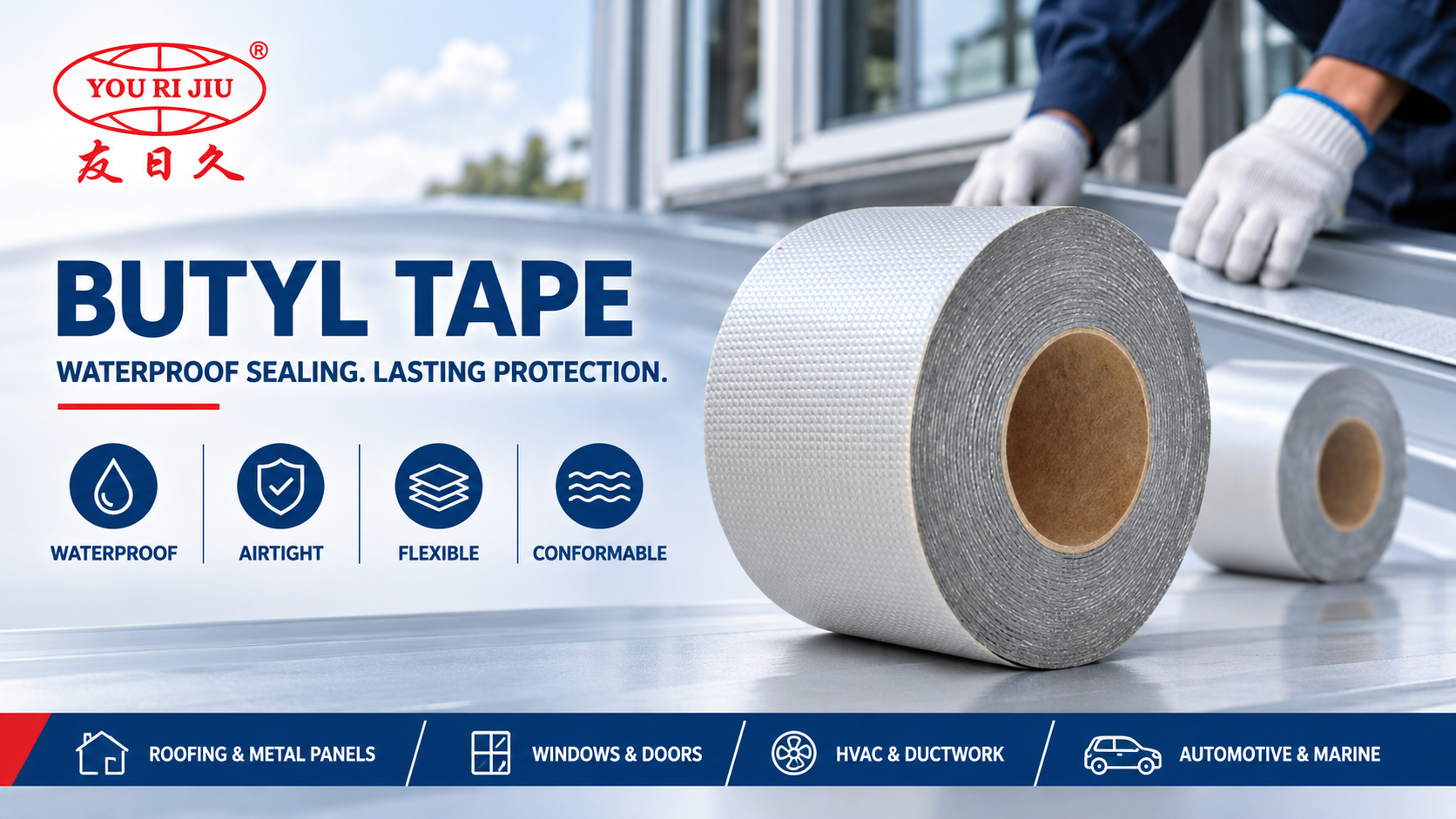
What Exactly Is Butyl Tape?
Butyl tape is a non-curing, pressure-sensitive sealing compound engineered from polyisobutylene synthetic rubber. Chemists polymerize isobutylene with small fractions of isoprene to create an exceptionally dense molecular matrix. This unique structure gives butyl rubber world-class impermeability to gases and moisture vapor.
Unlike silicone, polyurethane, or acrylic caulks that cure into rigid or semi-rigid solids, this compound remains permanently viscoelastic. It never fully hardens, cracks, or turns brittle over its functional lifespan. Instead, it maintains a tacky, rubberized consistency that moves dynamically with the substrates it joins.
Manufacturers supply this material either as self-wound extruded strips or backed with functional carriers such as aluminum foil, polyethylene, or fleece. Youyi engineers both supported and unsupported formats to handle high-stress industrial joints, mechanical overlaps, and complex perimeter seals.
Core Material Properties of Youyi Butyl Tape
Reliable moisture barriers rely on predictable material science. Youyi manufactures adhesive solutions that meet demanding mechanical and environmental standards. The resulting product exhibits several fundamental performance characteristics:
1. Impermeable Vapor and Moisture Barrier
Water molecules struggle to pass through polyisobutylene chains. The tight molecular packing provides an exceptionally low moisture vapor transmission rate (MVTR). By blocking liquid water, humidity, and airflow, the tape prevents hidden corrosion, wood rot, and mold colonization inside sealed assemblies.
2. Dynamic Viscoelasticity and Self-Healing
Joints expand during midday heat and contract during freezing nights. Rigid adhesives shear under this cyclical stress. Youyi Butyl Tape flexes continuously, absorbing shear forces and structural vibrations without debonding. If a fastener punctures the tape during construction, the pliable compound flows around the shank to maintain an airtight seal.
3. Broad Service Temperature Range
Extreme climate shifts ruin substandard adhesives. Premium formulations function reliably across a broad temperature profile, maintaining bond strength from -40°C up to +90°C. They resist cold embrittlement during freezing winters and resist softening or flowing during peak summer exposure on dark metal roofs.
4. Superior Gap-Filling and Surface Conformability
Real-world job sites rarely offer mirror-smooth surfaces. Industrial substrates feature mill scale, surface roughness, tooling marks, and fastener heads. Because the adhesive yields under light pressure, it fills microscopic valleys and uneven gaps across rigid surfaces to create a continuous gasket.
5. Broad Multi-Substrate Adhesion
The tape bonds tenaciously to high- and low-surface-energy materials through physical wetting. It adheres directly to bare and coated metals, glass, cured concrete, treated lumber, and common plastics. It adheres without aggressive chemical primers in most general building conditions.
Industrial testing programs confirm these capabilities. Products designed to comply with ASTM C1281 maintain continuous contact under mechanical displacement, proving the longevity of preformed tape sealants under extreme environmental stress.
Major Industrial Applications and Solutions
Because synthetic elastomeric tapes balance flexibility with chemical stability, multiple global industries rely on them. Youyi supplies specialized sealing solutions for critical joints across diverse sectors:
Roofing and Architectural Metal Building Systems
Metal building envelopes endure severe thermal expansion cycles. When sun beats down on standing seam roofs, corrugated panels shift along their laps. Applying Butyl Tape between overlapping metal sheets creates an impenetrable barrier against wind-driven rain.
- End Laps and Side Laps: Seals sheet metal seams against hydrostatic pressure during severe storms.
- Ridge Caps and Flashing: Prevents wind-driven moisture from entering roof peaks and parapets.
- Fastener Sealing: Gaskets penetrate roof screws, preventing leaks around metal washers.
Recreational Vehicles, Caravans, and Modular Buildings
RVs and prefabricated mobile buildings endure continuous road vibration, racking, and chassis twisting. Traditional caulking seams split under these dynamic loads, causing costly interior water damage.
Vehicle manufacturers apply Youyi Butyl Tape beneath exterior trim rails, window extrusions, roof hatches, and entry doors. The tape absorbs road shocks and road debris impact without parting from the fiberglass, aluminum, or composite panels.
Fenestration and Glazing Installations
Window frames and commercial curtain walls represent the most vulnerable perimeter seals in architecture. Improper sealing leads to catastrophic air drafts, drafts, and water intrusion.
Installing preformed tape around window flanges creates a primary barrier against drafts and exterior moisture. The compound dampens acoustic transfer while accommodating the differing expansion rates between aluminum frames and surrounding masonry or timber framing.
HVAC and Air Handling Infrastructure
Commercial ventilation systems require airtight ductwork to minimize fan energy waste and control indoor air quality. Leaky duct joints force central plants to work harder, driving up building operating costs.
Technicians apply butyl sealing strips along transverse duct flanges, access panels, and damper connections. In accordance with guidelines from SMACNA, maintaining airtight duct seals prevents air leakage and stops conditioned air from escaping unconditioned plenum spaces.
Marine and Automotive Assembly
In boatbuilding, technicians use non-hardening tape to bed deck hardware, cleats, portlights, and through-hull fittings located above the waterline. The compound creates a watertight gasket that dampens motor vibration and prevents saltwater ingress.
Automotive production lines apply specialized butyl cords to seal inner door moisture membranes, taillight housings, wire harness grommets, and floor pan seams against cabin noise and moisture intrusion.
Deck Substructures and Timber Joist Protection
Outdoor composite decking often outlives the treated wood framing beneath it. Water pools on top of joists, seeping into screw holes and rotting the timber substructure prematurely.
Applying protective strips over joists, bearers, and ledger boards shields the underlying timber from standing water. When contractors drive deck screws through the tape, the elastomeric rubber wraps tightly around the threads, preventing water from reaching the interior wood grain.
Comparative Analysis: Butyl Tape vs. Alternative Sealants
Selecting the wrong sealant format creates ongoing maintenance headaches. Compare how extruded preformed tape performs against common field-applied sealants:
- Consistency of Thickness: Liquid sealants depend heavily on installer technique. They easily end up too thin or uneven. Preformed tape guarantees a uniform thickness across the entire joint.
- Cure Time Requirements: Polyurethanes and silicones require hours or days to cure before handling weather exposure. Pressure-sensitive tape seals instantly upon compression, requiring zero curing downtime.
- Cleanliness and Waste: Liquid caulk tubes often lead to messy squeeze-out, smeared substrates, and chemical run-off. Tape strips release cleanly from protective liners with zero mess and minimal scrap.
- Joint Disassembly: While polyurethane forms permanent, tear-prone bonds that damage components during repairs, butyl allows for clean joint disassembly when servicing RV vents or marine fittings.
Step-by-Step Installation Best Practices
Even premium materials underperform if installed improperly. Follow these standardized procedures to achieve reliable, long-lasting seals with Youyi Butyl Tape:
1. Surface Preparation
Adhesion requires direct contact with a clean, solid substrate. Remove all loose debris, dust, rust, and residual oil from the joint surfaces. Clean the target area with isopropyl alcohol or an approved solvent, then let it dry completely. Never install tape over wet or frosted surfaces.
2. Application Without Stretching
Unroll the tape and position it directly onto the joint. Press it firmly against the surface with your fingers or a silicone seam roller while leaving the release liner intact. Avoid pulling or stretching the tape during application. Stretched synthetic rubber retains elastic memory and may pull away from joint edges over time.
3. Liner Removal and Overlapping
When joining multiple pieces, overlap the ends by at least 25 mm (1 inch) rather than placing them end-to-end. Press the overlapping ends together to eliminate pinhole air paths. Once the strip is seated, peel back the release paper smoothly at a low angle.
4. Mating and Mechanical Compression
Align the mating panel or component accurately before making contact. Once the surfaces meet, apply firm, uniform mechanical pressure using clamps, rollers, or threaded fasteners. This compression forces the soft rubber to flow into surface irregularities, completing the waterproof seal.
Why Partner with Youyi for Industrial Adhesive Solutions?
Youyi brings decades of precision manufacturing experience to the adhesive tape market. Our modern production facilities combine high-capacity polymer synthesis with accurate extrusion lines. This infrastructure delivers uniform roll geometry, dependable tack, and stable aging performance.
We work directly with industrial clients to supply custom-engineered solutions. Whether your operations require specific roll widths, specialized thicknesses, double-sided adhesive formats, or high-tensile foil facings, Youyi tailors products to your production parameters. Our rigorous quality control ensures that every roll meets international industrial standards.
Frequently Asked Questions (FAQ)
Q1: How long does Butyl Tape typically last once installed in an exterior joint?
A1: When properly compressed and protected from direct mechanical abrasion, Youyi Butyl Tape can deliver a functional service life exceeding 15 to 20 years. Because the polyisobutylene base does not contain fugitive plasticizers, it resists oxidation, embrittlement, and drying out far longer than standard rubber sealants.
Q2: Can Youyi Butyl Tape replace traditional liquid silicone or polyurethane caulking?
A2: Yes, across many lap joints, mechanical seams, and flanged connections, tape is the superior option. It delivers consistent cross-sectional thickness, bonds instantly without curing, and eliminates messy cleanup. However, for exposed aesthetic joints requiring structural tooling or custom color matching, liquid sealants may still be preferred.
Q3: What temperature range is optimal for applying Butyl Tape to ensure solid adhesion?
A3: For optimal initial tack, apply the tape at temperatures between +5°C and +40°C (+41°F to +104°F). If cold-weather installation is unavoidable, store the rolls in a heated staging area before use, or gently warm the substrate with a hot-air tool to promote immediate wetting and adhesion.
Q4: Can I paint directly over Youyi Butyl Tape after assembly?
A4: Most architectural paints do not adhere well to pure, non-curing butyl surfaces due to their flexible nature and low surface energy. If your project requires a painted finish, choose a foil-faced or fleece-backed variant from Youyi, which readily accepts exterior primers and industrial coatings.
Q5: How does Butyl Tape behave when exposed to continuous vibration or joint shifting?
A5: The tape excels in high-vibration settings like RV assemblies, commercial vehicles, and metal roofing systems. Its viscoelastic properties absorb mechanical shock, damp acoustic energy, and deform elastically without shearing or peeling away from the substrates.
Building More Resilient Assemblies
Preventing water damage and managing air barriers does not require complicated, unpredictable methods. By using the natural impermeability and dynamic elasticity of polyisobutylene, engineers can build durable protection into any joint design.
Youyi Butyl Tape delivers the balance of adhesion, temperature resistance, and ease of use demanded by high-efficiency construction and industrial manufacturing. Choose reliable, engineered sealing tapes to protect your projects from moisture and air infiltration for decades to come.