




From high-speed POS receipts to life-critical medical records and logistics labels, thermal paper remains the backbone of direct thermal printing. Yet many procurement professionals underestimate the technical variances that separate a reliable roll from a frequent cause of printhead wear, fading receipts, or regulatory non-compliance. This guide provides a component-level analysis of thermal paper, explores application-specific demands, diagnoses persistent industry failures, and offers a structured purchasing framework — with insights from Youyi, a specialist in engineered media solutions.
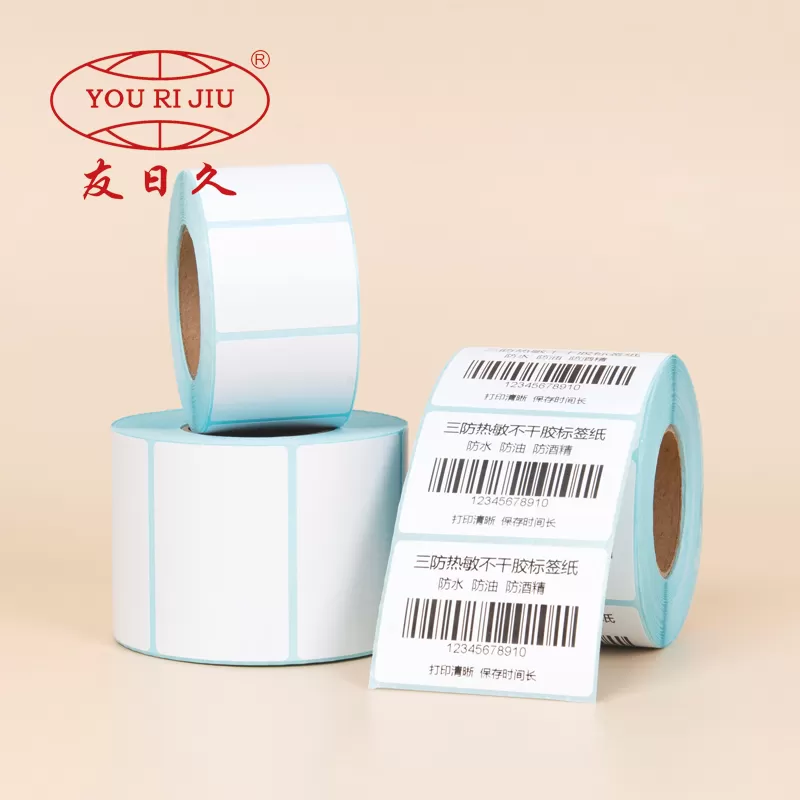
1. Direct Thermal Printing: The Reaction Layer That Defines Performance
Unlike ribbon-based thermal transfer, thermal paper contains a leuco dye and a developer within its coating. When the thermal printhead applies heat, the developer (often a phenolic compound or alternative) protonates the dye, causing a color change—typically black or blue. Key engineering parameters include:
Activation energy threshold (mJ/mm²): Determines sensitivity. Low-energy coatings enable longer printhead life but require precise heat control.
Coat weight (g/m²): Standard grades use 4–6 g/m²; premium top-coated variants may exceed 7 g/m² for enhanced image stability.
Top-coat function: A protective layer (acrylic or silicate-based) resists plasticizers, oils, moisture, and UV fading. Without it, images degrade within weeks under aggressive conditions.
The homogeneity of the coating directly influences print uniformity. Poor dispersion leads to banding or weak spots—a frequent cause of unreadable barcodes. Manufacturers like Youyi employ in-line coat weight monitoring to ensure variance below ±0.3 g/m² across production runs.
2. Quality Metrics That Define Industrial-Grade Thermal Paper
Professional buyers must move beyond “width and length” to evaluate these measurable attributes:
Dynamic sensitivity (D-score): Measured via gray-scale printing at incremental energies. High-quality rolls show a broad energy window (4–12 mJ/mm²) without over-sensitization.
Static image stability: Tested under ISO 18941 (dark accelerated aging) and ISO 18909 (light stability). Top-tier media retain ≥80% optical density after 5 years at 25°C/50% RH.
Surface smoothness (Sheffield units): Below 200 SU ensures consistent head contact. Rougher surfaces cause micro-gaps and incomplete development.
Caliper uniformity: Variation above ±4 µm creates pressure fluctuation across the print line, producing uneven density.
Friction coefficient (kinetic): 0.25–0.35 prevents multi-feeds in autoloaders while avoiding roll sticking in high-humidity environments.
For B2B applications requiring FDA or REACH compliance, the coating must also list all substances (e.g., no BPA/BPS beyond regulatory thresholds). This is non-negotiable for food-contact receipts or pharmaceutical labeling.
3. Classifying Thermal Paper Grades: Standard, Top-Coated, Phenol-Free, and Specialty
Understanding grade families prevents over-specification or premature failure:
Economy / standard thermal paper: No top-coat, moderate sensitivity. Designed for short-term receipts (retail, parking tickets). Image retention: 2–6 months indoors, away from light/heat.
Top-coated thermal paper: Adds a protective layer. Resists water, cooking oil, plastic wrap, and hand creams. Ideal for kitchen order tickets, medical records, and logistics labels. Achieves 2–5 years of readability.
BPA-free & phenol-free thermal paper: Replaces bisphenols with proprietary developers (e.g., urea-based or ascorbyl derivatives). Meets EU 2018/2005 and California Proposition 65. Performance levels can match traditional grades when properly engineered.
Linerless thermal paper: Adhesive-coated back without release liner. Reduces waste and enables longer rolls in portable printers. Demands aggressive top-coat to prevent adhesive migration.
Colored thermal paper: Uses different leuco dyes for red, blue, or custom colors. Used for promotional receipts or high-visibility alerts.
Selecting the wrong grade is a top cause of customer complaints (e.g., faded pharmacy labels or smudged courier waybills). Youyi provides cross-reference charts matching printer models and application environments to optimal thermal paper grades.
4. Five Core Industry Applications and Their Demands on Thermal Paper
Each use case imposes specific constraints that directly influence roll selection:
High-volume POS (retail, QSR): Requires fast activation (<2 µs pulse response) and resistance to common store chemicals (hand sanitizers, detergents). Top-coated BPA-free rolls are now standard in Europe and North America.
Healthcare (ECG, ultrasound, lab labels): Demands archival stability (minimum 5 years) plus resistance to ethanol and isopropanol. Medical-grade thermal paper often uses top-coat with cross-linked acrylics.
Logistics & shipping labels: Must endure friction, humidity, and sunlight on conveyor belts and delivery vans. High-sensitivity top-coated or resin-laminated thermal paper prevents barcode dropout.
Self-service kiosks (ATMs, fuel pumps, ticket machines): Require high-abrasion resistance and consistent performance across −20°C to +50°C. Paper stiffness (Taber stiffness) also matters to prevent jams in unattended printers.
Entertainment / lottery tickets: Often exposed to skin oils and flexing. A flexible base sheet and strong top-coat prevent cracking and fingerprint-induced fading.
Integrating application tests into the procurement process (e.g., simulated sweaty-hand rub tests or freezer-to-ambient cycling) avoids costly field failures.
5. Industry Pain Points: Why Substandard Thermal Paper Disrupts Operations
Over a decade of field analysis, three failure patterns dominate B2B complaints:
Premature image fading: Caused by low-grade developers (e.g., excess BPA or insufficient stabilizers) and absence of UV inhibitors. Images can vanish in 3 weeks under fluorescent light or car dashboards.
Printhead residue and wear: Poorly milled coatings or dust from converted edges deposits on the thermal head, creating vertical voids and increasing head replacement frequency by 3x–4x.
Jamming and multi-feeding: Inconsistent moisture content (dry brittle edges or swollen centers) and improper core winding tension cause erratic paper travel, especially in high-speed printers.
Regulatory compliance gap: Many low-cost rolls still contain BPA or elevated levels of BPS. Customers in EU or US states face fines or product recalls if non-compliant receipts are used in food-related transactions.
Mitigation involves three steps: (1) request batch-specific coating analysis, (2) conduct 72-hour image stability tests under accelerated aging (60°C/90% RH), and (3) validate printhead cleanliness after 10,000 linear feet of printing. Youyi integrates these tests into its standard quality assurance before shipment.
6. Selecting a Thermal Paper Partner: B2B Checklist
Beyond price per roll, evaluate potential suppliers using these technical criteria:
Coating formulation transparency: Are MSDS and technical data sheets (TDS) available for each batch? Look for details on developer type, coat weight, and top-coat polymer family.
Environmental endurance data: Does the supplier provide humidity/temperature cycling results (e.g., 40°C/90% RH for 48 hours followed by UV exposure)?
Printhead wear testing: Ask for wear data (measured as head resistance change or visual inspection) after 50 km of printing. Premium rolls should cause minimal abrasion.
Custom dimension capabilities: Can they supply non-standard widths (e.g., 44mm, 82.5mm) and core sizes (12mm, 25.4mm, 40mm) with consistent end-seal trimming?
Static decay control: For dry environments, surface resistivity below 10¹² Ω/sq prevents static-related double-feed. Check if anti-static backcoat is applied.
A reliable partner also provides lot traceability and returns analysis for any field failure. Youyi maintains ISO 9001:2015 certified converting lines and offers pre-production samples matched to your printer make/model (Epson, Star, Zebra, Bixolon, etc.) before bulk orders.
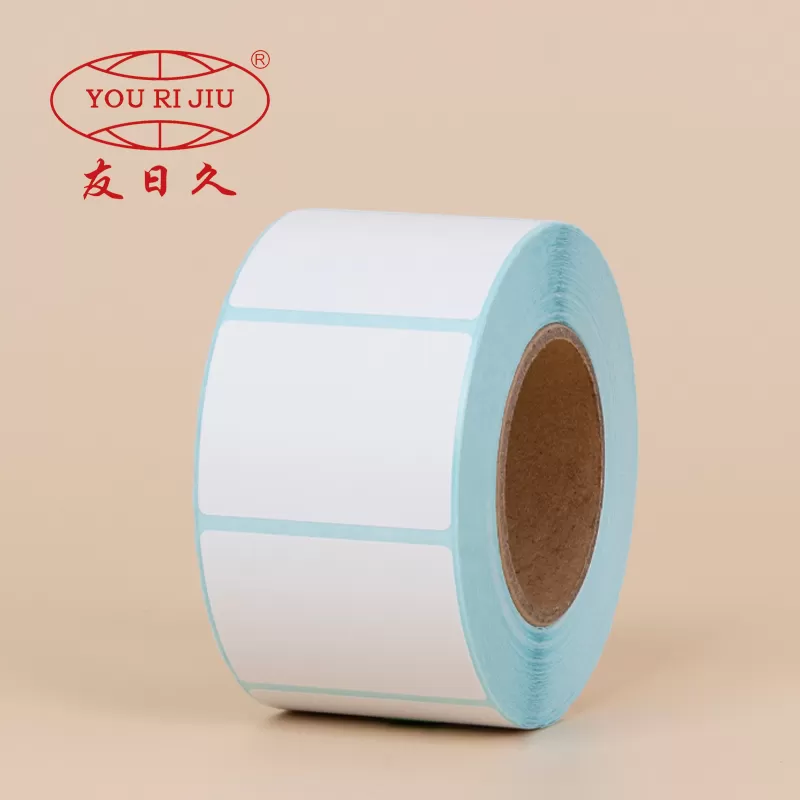
7. Best Practices for Storing and Handling Thermal Paper Rolls
Even the best thermal paper degrades under poor storage conditions. Implement these rules in your warehouse or retail locations:
Temperature & humidity: Maintain 10–25°C (50–77°F) and 30–60% RH. Avoid attics, basements, or loading docks with condensation cycles.
Light protection: Store in original opaque packaging until use. UV fluorescent lights or direct sun cause irreversible fogging (background darkening).
Chemical isolation: Keep away from solvents, adhesives, ammonia cleaners, and plasticized PVC wraps. These accelerate dye development or image erasure.
First-in, first-out (FIFO): Even with top-coated rolls, use inventory within 18 months of production. Mark receiving date on each master carton.
Avoid heavy stacking: More than 10 cartons high can deform core edges, leading to out-of-round rolls that wobble in printer holders.
For warehouses with high temperatures, consider refrigerated storage only if rolls are sealed with desiccant and acclimated for 24 hours before opening to prevent moisture condensation.
Frequently Asked Questions (FAQ) About Thermal Paper
Q1: How long can thermal paper receipts stay readable under normal
office conditions?
A1: Standard thermal paper (no top-coat) retains
legible images for 6–12 months when stored away from sunlight and heat.
Top-coated archival-grade paper extends this to 5–8 years. For medical or legal
requirements, specify paper certified for 10+ years under ISO 18941.
Youyi offers a “long-life” series that passes 7-year
accelerated aging tests.
Q2: Is BPA-free thermal paper really necessary for all retail
applications?
A2: It depends on local regulations. In the EU,
Canada, and several US states (e.g., California, Washington, Connecticut), BPA
is restricted in thermal paper for cash register receipts due to skin contact
concerns. Even where not mandated, many large retailers voluntarily switch to
BPA-free alternatives to reduce liability and meet green procurement goals.
Q3: What causes black streaks or ghosting on thermal prints, and how
can I prevent it?
A3: Streaks typically indicate debris accumulated
on the printhead (coating dust or paper fibers) or a worn head. Ghosting (faint
repeated images) occurs when the head overheats and re-activates the coating.
Solutions: clean the printhead every 5,000–10,000 receipts using isopropyl
alcohol wipes, and select thermal paper with low-shedding,
precisely calendered surfaces. Also ensure the printer’s heat pulse settings
match the paper’s sensitivity curve.
Q4: Can thermal paper be recycled with standard office
paper?
A4: Most thermal paper contains developer chemicals
(including bisphenols or alternatives) that contaminate paper pulp, making it
non-recyclable through conventional mills. Specialized thermal paper recycling
streams exist, but they are rare. Best B2B practice: work with a waste-to-energy
partner or a dedicated paper recycler that accepts coated stock. Some linerless
thermal paper reduces overall waste volume but still faces the same recycling
limitations.
Q5: What dimensions and core sizes are commonly available for B2B
thermal paper orders?
A5: Standard widths range from 44mm (portable
printers) to 80mm (POS), 82.5mm (kitchen), and 110mm (lab/industrial). Core
diameters: 12mm (1/2”), 25.4mm (1”), 40mm (1.57”). Lengths vary from 50ft to
1000ft depending on roll diameter. Youyi supplies custom-slit
rolls and offers core adapters to match legacy printer holders, with minimum
order quantities adapted to mid-sized distributors.
Need a Reliable Thermal Paper Supplier for Your Business?
Selecting the wrong thermal paper disrupts operations, increases printhead costs, and risks compliance violations. Whether you require high-sensitivity paper for logistics automation, phenol-free media for food-contact receipts, or custom widths for legacy systems, expert specification makes the difference.
Contact Youyi for technical consultations, free samples tested against your printer model, and volume pricing tailored to your distribution or end-user demand. Share your application environment, expected shelf life, and any regulatory requirements — receive a product recommendation within two business days.
Send inquiry to Youyi’s thermal paper specialist → or submit your specifications through the contact page.