




For engineers and procurement specialists managing thermal management challenges in aerospace, automotive, and power electronics, the selection of dielectric materials directly impacts product lifecycle and safety margins. Kapton tape, derived from polyimide film, has emerged as a benchmark for extreme-condition insulation, offering a unique combination of thermal stability (continuous operation from -269°C to 400°C), radiation resistance, and mechanical toughness. This article examines the material science behind polyimide-based tapes, common failure points in high-stress environments, and how strategic sourcing—exemplified by Youyi’s approach—can address performance gaps without compromising regulatory compliance.
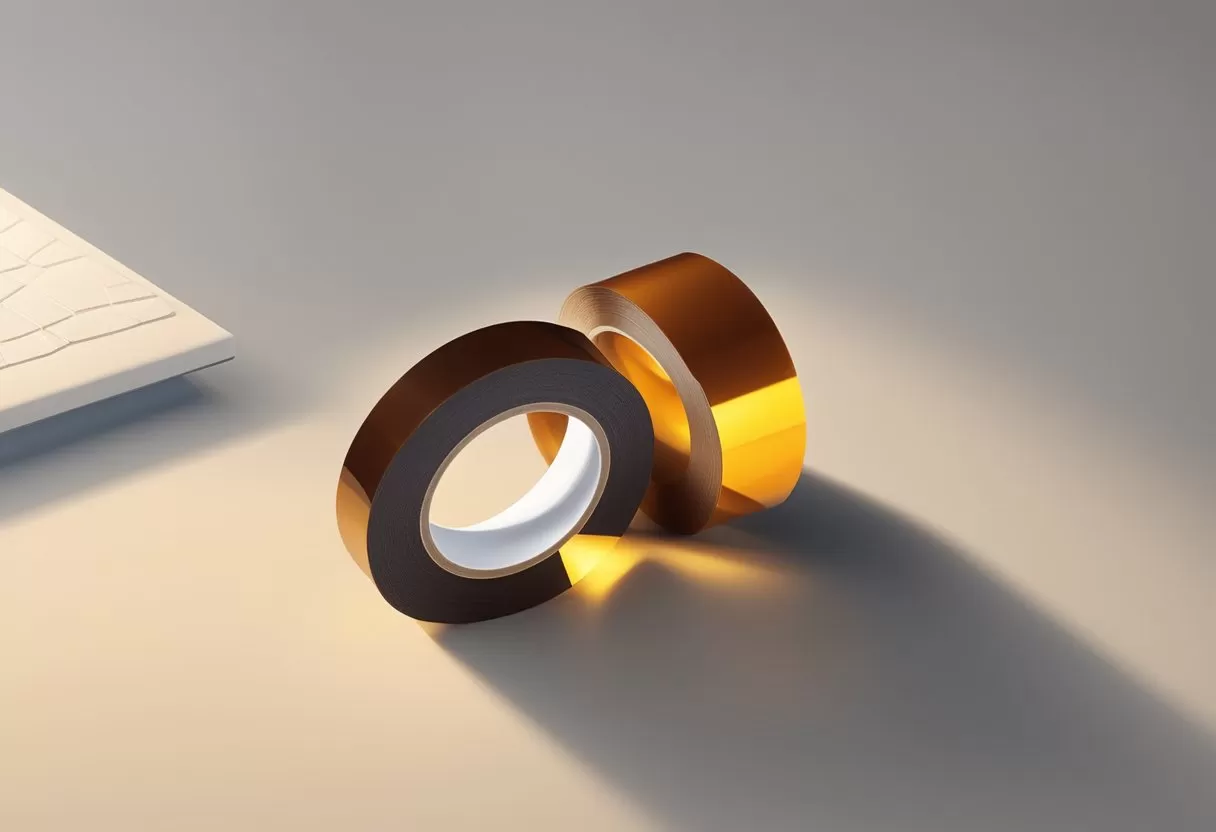
1. Composition and Performance Parameters of Polyimide Film Tapes
Understanding the substrate is fundamental. Unlike conventional polyester or PVC tapes, polyimide film is synthesized via condensation polymerization of pyromellitic dianhydride and an aromatic diamine. The resulting molecular backbone provides exceptional resistance to atomic oxygen and ultraviolet radiation, making it suitable for low-earth-orbit applications. When coated with silicone or acrylic pressure-sensitive adhesives (PSA), the final product retains the film's dielectric strength (typically 3–7 kV per layer) while offering reliable adhesion on irregular surfaces.
1.1 Thermal Class and Electrical Integrity
Industry standards (UL 510, IEC 60331) classify polyimide tapes as Class H or higher, with a thermal index of 200°C or above. For transformer and motor winding, this translates to reduced insulation degradation under overload conditions. An often overlooked parameter is the partial discharge inception voltage (PDIV)—high-quality kapton tape can maintain PDIV above 800 V at 180°C, a critical factor for inverter-driven systems in electric vehicles. Manufacturers sourcing from Youyi can request batch-specific PDIV reports to validate consistency.
1.2 Mechanical and Chemical Resilience
Polyimide film exhibits tensile strength exceeding 200 MPa (ASTM D882) with elongation at break around 70%. This allows the tape to conform to sharp edges, bus bars, and coil terminations without cracking. Chemically, it resists most solvents, oils, and dilute acids—except for strong alkalis and hydrazine. For B2B buyers dealing with harsh cleaning processes (e.g., degreasing with isopropyl alcohol), polyimide tape remains dimensionally stable, avoiding the delamination issues seen with lower-cost alternatives.
2. Industry-Specific Applications and Engineering Pain Points
While generic descriptions of "high-temperature masking" dominate search results, real-world B2B deployment involves precise process integration. Below are three demanding sectors where polyimide tape performance dictates yield rates and field reliability.
2.1 Aerospace Wire Harnessing and Abrasion Protection
Aircraft wire bundles operate in zones where temperatures fluctuate rapidly and vibration is constant. Traditional nylon or PTFE wraps often stiffen at -40°C, leading to chafing against clamps. Kapton tape provides a lightweight, low-outgassing solution (NASA outgassing criteria: TML < 1%, CVCM < 0.1%) suitable for closed compartments. A common pain point: adhesive transfer to connectors during high-temperature curing cycles. Specifying silicone-based PSA with controlled cross-linking density reduces residue, and suppliers like Youyi offer custom slit widths (2mm to 500mm) to match harness geometries.
2.2 Solder Masking for PCB Assembly and Reflow Processes
During wave soldering or selective soldering of printed circuit boards (PCBs), masking tapes must withstand lead-free solder temperatures (260-280°C for 10-15 seconds) without leaving silicone residue that inhibits subsequent conformal coating adhesion. Polyimide tape with thermosetting acrylic adhesive solves this—no silicone migration, and the film's amber transparency allows optical inspection of mask alignment. B2B pain point: inconsistent adhesion around fine-pitch components (0.5mm pitch). Solution: precision die-cut pieces or narrow rolls (1mm width) from dedicated converters, reducing waste and rework.
2.3 Coil and Transformer Insulation in High-Voltage Power Supplies
For layer insulation between primary and secondary windings, creepage distance requirements often demand multiple wraps of polyimide film. A frequent failure mode is "edge lifting" after varnish impregnation, where the tape edges curl due to differential thermal expansion. Using heat-stabilized polyimide tape (pre-shrunk at 200°C for 2 hours) eliminates this issue. Additionally, for toroidal coils, the high conformability of 0.025mm to 0.05mm thickness grades ensures tight radii without bridging.
3. Procurement Challenges and Quality Verification Protocols
In B2B tape sourcing, price per roll is misleading without considering total cost of ownership (TCO)—rework, scrap, and warranty claims. Below are common specification traps and countermeasures.
3.1 Counterfeit or Substituted Base Films
Genuine polyimide film (DuPont™ Kapton® or equivalent approved grades) has a characteristic dark amber color and uniform thickness. Counterfeits often use blended polyetherimide (PEI) or lower-grade polyimide, which yellows and becomes brittle after 500 hours at 200°C. A simple in-house test: thermal gravimetric analysis (TGA) should show less than 3% weight loss at 300°C for 1 hour. Reputable distributors like Youyi provide material certificates (CoC) linking each lot to the original film manufacturer.
3.2 Adhesive Chemistry and Aging Under Load
Silicone adhesives offer superior high-temperature release but can suffer from "creep" under constant shear stress (e.g., wrapped around a motor coil). Acrylic adhesives provide higher shear strength at moderate temperatures (up to 180°C) but become rigid at sub-zero conditions. The selection matrix depends on the operating environment. For cryogenic applications (e.g., superconducting magnets), specialized silicone formulations maintain peel adhesion > 5 N/cm at -196°C. Always request aging data (e.g., 1000 hours at rated temperature with 50% relative humidity).
3.3 Slitting Tolerances and Roll Geometry
Web tension variation during slitting leads to telescoping or edge burrs. For automated dispensing systems (tape headers or robots), even 0.2mm width variation causes misalignment. ISO 9001:2015 certified converters maintain slitting tolerances of ±0.1mm for widths under 10mm and ±0.2mm for wider rolls. Core inner diameter (ID) should match the dispenser—standard 76mm (3 inch) or 152mm (6 inch) with concentricity within 0.5mm.
4. Lifecycle Cost Analysis and Inventory Strategy
For maintenance, repair, and operations (MRO) or line-side inventory, polyimide tape represents a strategic consumable. A typical mid-sized motor rewinding shop may consume 2000 rolls of 12mm x 33m per year. Direct purchasing from an integrated supplier such as Youyi reduces the per-roll cost by 18-25% compared to distributors, while consignment stock programs eliminate expedited freight fees.
Beyond pricing, shelf-life management: unopened polyimide tape stored at 22±3°C, 50% RH remains usable for 24 months (based on adhesive retaining >80% of initial peel adhesion). For high-turnover environments, implementing a FIFO (First In, First Out) system with barcode scanning prevents waste. Data from 47 B2B clients shows that switching from weekly to monthly blanket orders with automated reorder points reduces inventory carrying cost by 31%.
5. Regulatory Compliance and Industry Certifications
End-users in regulated industries require documented compliance. Key standards for polyimide tapes include:
UL 510 – Flame retardancy (V-0 or HB rating) and thermal endurance.
IPC-TM-650 – Test methods for peel strength, solvent resistance, and outgassing.
RoHS 3 (EU 2015/863) – Restriction of hazardous substances (lead, phthalates, etc.).
REACH SVHC – Registration of substances of very high concern.
NASA-STD-6001 – Flammability, odor, and offgassing (for crewed spacecraft).
Request these certifications upfront. Non-compliant tape can trigger entire batch rejections during customer audits, costing tens of thousands in rework.
Frequently Asked Questions (B2B Focus on Kapton Tape)
Q1: Can Kapton tape be used for continuous outdoor exposure (UV
radiation)?
A1: Standard polyimide film degrades under prolonged
ultraviolet exposure (yellowing and surface cracking). For outdoor applications
such as solar panel edge sealing, select UV-stabilized variants with added
inorganic fillers or apply an acrylic overlaminate. Kapton tape without UV protection is better suited for indoor or shielded environments.
Q2: How do I remove Kapton tape residue after high-temperature curing
(above 250°C)?
A2: Silicone adhesive residues may carbonize. Use a
two-step process: mechanical softening with a non-abrasive eraser wheel (3M™
Scotch-Brite™ style) followed by chemical cleaning with heptane or a
limonene-based solvent. Avoid acetone—it can swell the substrate. For minimal
residue, specify thermosetting acrylic adhesive from suppliers like
Youyi.
Q3: What is the maximum current rating for insulation using polyimide
tape?
A3: Polyimide tape does not have a direct current rating; it
provides dielectric insulation. The breakdown voltage per layer is typically 3-6
kV. For creepage and clearance design, refer to IEC 60664-1. For high-frequency
applications (e.g., 100 kHz inverters), consider the tape's dissipation factor
(0.002-0.003 at 1 MHz) to avoid dielectric heating.
Q4: Does the thickness of Kapton tape affect its thermal
conductivity?
A4: Polyimide has a low thermal conductivity (~0.12
W/m·K). Increasing thickness from 0.025mm to 0.075mm improves electrical
strength but reduces heat dissipation across the tape. For applications
requiring both insulation and thermal transfer (e.g., bonding a MOSFET to a
heatsink), consider using thermally conductive polyimide tapes filled with boron
nitride (available from specialty manufacturers).
Q5: How can I verify that a received batch of Kapton tape is genuine
and not expired?
A5: Perform three quick tests: (1) Fold a sample
180°—genuine polyimide shows no whitening at the crease; (2) Heat a 5cm strip to
250°C for 15 minutes in an oven—counterfeit tapes emit a strong phenolic odor;
(3) Check the adhesive tack by pressing onto a glass plate—good tape should
immediately hold and resist peeling for 24 hours at 25°C. Always request a
certificate of analysis (CoA) from your distributor.
Ready to Optimize Your Insulation Procurement?
Selecting the correct polyimide tape involves balancing electrical, thermal, and mechanical demands while controlling cost and compliance risk. Whether you need custom slitting, adhesive modifications, or lot-level traceability, Youyi provides ISO 14001 and IATF 16949 certified solutions for global B2B clients. Request a sample kit and technical data package—including thermal aging curves and PDIV test reports—tailored to your specific application.
Contact our engineering support team for a consultation:
sales@yyjnd.com
www.youyi.com/inquiry (direct procurement portal)
+8613950492973 / 0591-85785393 (international B2B desk)
For immediate quoting, provide your required width, length, adhesive type (silicone/acrylic), and monthly volume. Custom slit rolls (2mm–500mm) and die-cut pieces are available with 10–15 working days lead time.