




This material is a synthetic rubber compound characterized by its high degree of impermeability to gases and moisture. Unlike traditional curing sealants that harden over time, this non-curing mastic remains permanently elastic and conformable. The viscoelastic nature of the compound allows it to flow into microscopic surface irregularities of a substrate, establishing a continuous, pressure-sensitive bond. Understanding the underlying chemistry and physical properties of this adhesive is necessary for engineers, procurement officers, and project managers who specify sealing solutions for demanding industrial environments.
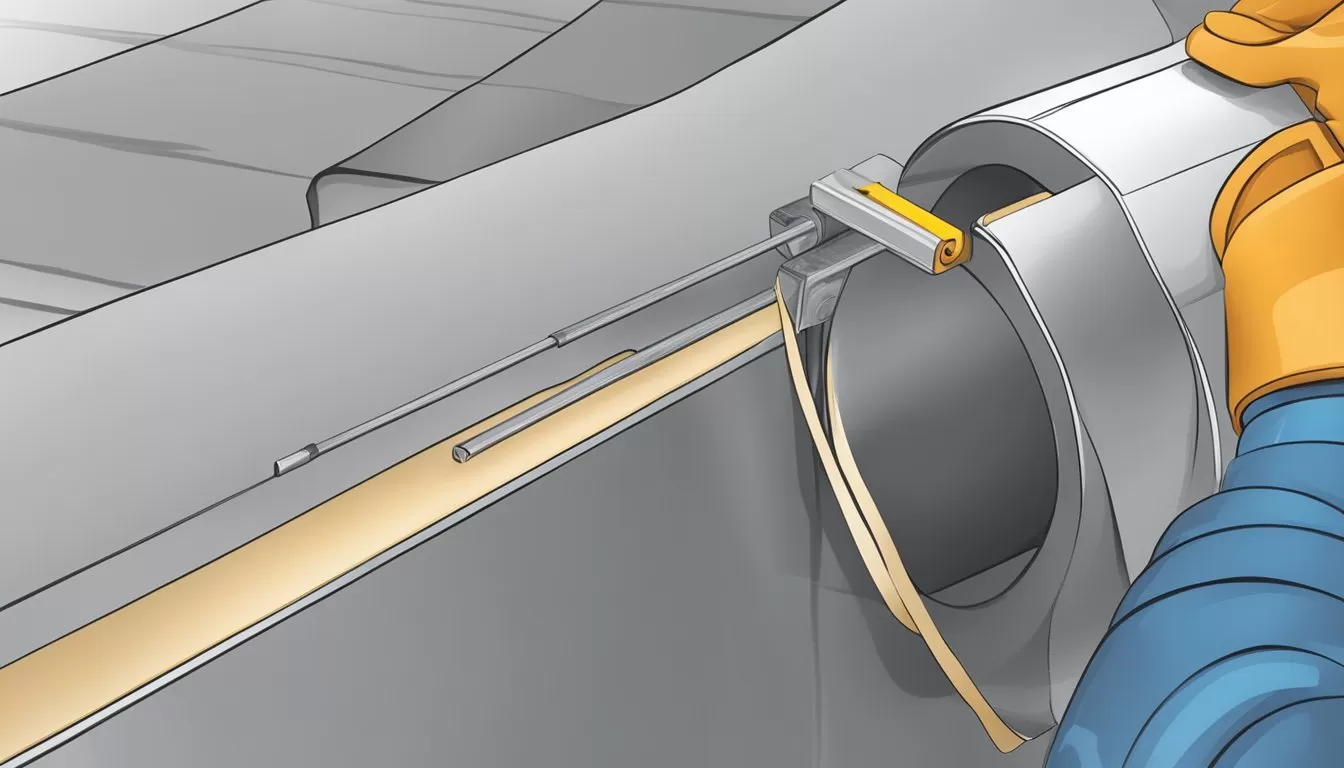
Chemical Formulation and Physical Attributes
The physical performance of polyisobutylene (PIB) sealants depends directly on their chemical composition. Unlike natural rubber or polyurethane, which possess double bonds in their polymer backbones, polyisobutylene features a saturated carbon chain. This molecular saturation prevents oxygen and ozone from breaking down the polymer, resulting in excellent resistance to atmospheric aging and ultraviolet exposure.
To tailor the polymer for industrial environments, manufacturing compounding processes introduce several components:
Inert Mineral Fillers: Typically calcium carbonate or magnesium silicate (talc) are added to control the rheology of the mixture. These fillers increase the viscosity and shear strength of the compound, preventing excessive sag or deformation under thermal loads.
Carbon Black and UV Stabilizers: These are incorporated to act as physical barriers against ultraviolet radiation, ensuring the polymer backbone remains stable even under direct solar exposure.
Tackifying Resins: These lower the glass transition temperature of the blend, maintaining flexibility and adhesion in sub-zero environments.
The balance between the polymer's molecular weight and the ratio of tackifiers determines the balance of adhesion and cohesion. Understanding the physical parameters of these materials is necessary for accurate engineering specification. Three main attributes define their behavior:
Viscoelasticity: The material dissipates mechanical energy under load, preventing the transmission of vibrations through joint assemblies.
Cold Flow: Under continuous pressure, the compound flows slowly to seal voids, a characteristic that allows it to self-heal minor installation defects.
Tensile and Elongation: Highly formulated compounds can undergo significant elongation (often exceeding 300%) without tearing, allowing structural joints to move during thermal expansion cycles.
Solving Common Industry Failures with High-Quality butyl tape
In large-scale industrial projects, adhesive failures can lead to moisture intrusion, structural damage, and costly remediation. When analyzing sealant failure, engineers differentiate between adhesive failure—where the sealant separates cleanly from the substrate—and cohesive failure, where the sealant splits internally.
Preventing these failures requires an understanding of the factors that govern adhesive performance. Firstly, surface contamination must be eliminated. Modern pressure-sensitive formulations rely on close contact with the substrate to establish intermolecular forces (van der Waals forces). The presence of surface moisture, dust, or mold-release agents blocks this contact, leading to rapid adhesive failure.
Secondly, the thermal expansion coefficients of joined materials must be accommodated. In metal building construction, a steel panel and an aluminum trim piece will expand at different rates under thermal loading. A low-grade mastic tape will shear under this differential stress, leading to a breakdown in the barrier.
Thirdly, dimensional consistency is vital. Variations in tape thickness along a single roll create areas of lower pressure during installation, resulting in poor wet-out and potential leak paths. This is where advanced manufacturing practices are crucial. High-precision manufacturers, such as Youyi, implement automated extrusion lines with laser-based thickness gauge sensors. This ensures that every millimeter of the tape meets the specified thickness tolerance.
Lastly, release liner performance is frequently overlooked. In hot warehouses or field installation sites, a substandard liner may fuse with the adhesive compound, causing the tape to deform during unwinding. Specifying high-density polyethylene (HDPE) or high-grade siliconized paper liners ensures clean removal and preserves the dimensional integrity of the adhesive.
Major Industrial Application Scenarios
The adaptability of PIB-based sealants has led to widespread adoption across multiple industrial sectors, where long-term barrier performance is a primary requirement.
Metal Building and Roofing Systems
In the metal building industry, roofs and wall panels are continuously exposed to thermal cycling, wind uplift forces, and moisture. Standing seam roof panels and lap joints rely on pre-formed mastic tapes to prevent water ingress. Because metal panels expand and contract significantly throughout the day, the sealant must remain flexible at temperatures as low as -40°C and must not degrade or run at temperatures reaching 90°C. By forming a continuous barrier, the sealant also isolates different metals, preventing galvanic corrosion.
Automotive and Transportation Industries
Commercial vehicles, buses, trains, and recreational vehicles (RVs) are subjected to continuous vibration and mechanical shock during operation. Sealants in this sector must serve a dual purpose: preventing water leaks and dampening acoustic transmission. Polyisobutylene tapes are applied to seal windshield assemblies, side panel joints, door vapor barriers, and sunroof assemblies. The non-curing property ensures that the seal remains intact despite years of structural vibration.
Glazing and Window Installation
Used as a primary sealant in commercial glazing systems, insulating glass unit (IGU) fabrication, and residential window framing, this compound provides the initial barrier against moisture vapor transmission. This helps protect secondary silicone or polyurethane sealants from long-term degradation caused by trapped moisture.
Infrastructure and Underground Sealing
In civil engineering, sealing precast concrete joints, wastewater pipes, manhole covers, and concrete culverts is essential for environmental protection. Polyisobutylene-based sealants resist the hydrostatic pressure of surrounding groundwater and maintain their seals despite soil movement and chemical exposure.
Key Performance Metrics and Testing Standards
When evaluating adhesive sealants for B2B procurement, several empirical parameters should be reviewed to ensure suitability for the target environment:
Moisture Vapor Transmission Rate (MVTR): This metric measures the passage of water vapor through a unit area of material over a specific period (typically expressed in g/m²/24h). PIB-based compounds feature some of the lowest MVTR values among commercial elastomers, making them superior moisture barriers compared to silicone or polyurethane sealants.
Service Temperature Range: High-performance sealants must maintain their physical properties across a broad temperature range. Standard formulations are rated for continuous service from -40°C up to 90°C, with specialized versions capable of surviving temporary excursions up to 120°C without liquefying.
Peel Adhesion (ASTM D3330): This test measures the force required to peel the adhesive tape from a standardized stainless steel plate or specific substrate material. A consistent peel profile indicates uniform tack and adhesive strength.
Shear Resistance under Static Load (ASTM D3654): This evaluates the ability of the adhesive to resist sliding or shearing forces under a constant weight. To guarantee adherence to these rigorous performance baselines, Youyi maintains dedicated laboratories where each production lot is tested for tensile strength, elongation, and peel adhesion under simulated environmental aging.
Custom Specifications and B2B Sourcing Parameters
Procuring adhesive solutions for large-scale industrial projects requires careful coordination between design engineers and manufacturers. Off-the-shelf products often fail to meet specific dimensional tolerances or environmental requirements. When specifying butyl tape for bulk industrial orders, procurement teams must verify not only the physical dimensions but also the packaging options, such as spool wound rolls for continuous automated assembly lines versus standard pancake rolls for manual installation.
Backing Material (Carrier): Depending on the application, the adhesive compound can be supplied as a double-sided transfer tape (no carrier) or laminated to a specific backing. Common backing options include heavy-duty aluminum foil (for UV exposure and vapor barrier properties), polyethylene film (for flexibility), or non-woven fleece (for paintability and plaster adhesion).
Dimensional Configurations: Standard widths range from 5mm up to 500mm, with thickness profiles from 0.5mm to 10mm. Selecting the exact width and thickness is necessary to balance performance and material costs.
Release Liner Options: For high-speed automated application lines, a robust plastic release liner (such as HDPE or PET) is often preferred to prevent tearing, whereas manual installation can utilize standard siliconized paper liners.
For specialized B2B projects, Youyi offers customized formulation adjustments, adjusting tack, shear, and color (commonly black, grey, or off-white) to match the physical characteristics of the target substrate.
Project Consultations and Custom Procurement
For commercial enterprises, high-volume manufacturing facilities, and civil infrastructure projects, identifying the precise adhesive formulation is key to preventing long-term structural issues. Youyi provides specialized engineering support, providing bespoke thickness configurations, carrier laminations, and custom-width rolls designed to integrate with automated assembly processes or manual construction workflows. To request product samples, verify compatibility parameters for specific substrates, or discuss volume pricing structures, please contact our distribution team to submit an inquiry.
Frequently Asked Questions
Q1: What is the primary difference between polyisobutylene sealants and silicone sealants?
A1: Polyisobutylene sealants are non-curing, permanently plastic, and provide an extremely low moisture vapor transmission rate (MVTR), making them highly effective vapor barriers. Silicone sealants, on the other hand, cure into an elastic rubber, are highly breathable (allowing more moisture vapor to pass through), and are typically used for high-movement joint sealing rather than absolute moisture isolation.
Q2: Can butyl tape be applied to wet or frozen substrates?
A2: No. While the compound itself is completely waterproof once applied, the presence of surface moisture, condensation, or ice prevents the pressure-sensitive adhesive from establishing molecular contact with the substrate. Surfaces must be thoroughly dry, clean, and free of frost or dust before installation to ensure a long-lasting bond.
Q3: How does temperature affect the installation and performance of these adhesive strips?
A3: Low temperatures reduce the initial tack of the adhesive, making it feel less sticky during application, though its long-term sealing properties remain unaffected once bonded. High temperatures soften the compound, making it more conformable. For optimal installation, it is recommended to apply the tape at temperatures above 5°C, unless a specialized cold-weather formulation is specified.
Q4: What is the estimated service life of a high-grade polyisobutylene adhesive in outdoor environments?
A4: When properly shielded from continuous, direct physical abrasion, high-quality formulations can maintain their elasticity, adhesion, and sealing performance for over 20 years. Their resistance to UV radiation and thermal cycling prevents them from cracking, shrinking, or drying out over time.
Q5: Is this adhesive material compatible with plastics and synthetic rubbers like EPDM?
A5: Generally, yes. It exhibits excellent compatibility with most building plastics, concrete, glass, and metals. However, it should not be used in contact with materials containing active plasticizers or solvent-based compounds, as these can migrate into the polymer and degrade its physical structure. Conducting a compatibility test is recommended for unusual synthetic materials.