




Industrial procurement and plant management require a granular understanding of material science to avoid line stoppages and installation failures. Among the diverse array of pressure-sensitive adhesives used in manufacturing, construction, and entertainment, selecting the appropriate cloth tape requires a detailed evaluation of both textile mechanics and polymer chemistry. Standard utility-grade tapes often fail under the thermal, mechanical, and environmental stresses of heavy industrial environments.
For operations managers and procurement professionals, sourcing high-performing materials is not merely about finding a temporary binding agent; it is about ensuring long-term adhesion, mechanical integrity, and cost efficiency. Manufacturers like Youyi provide specialized adhesive solutions engineered to meet rigorous industrial specifications. This analysis examines the structural variables, adhesive compositions, and performance parameters that define high-caliber fabric-backed adhesive systems.
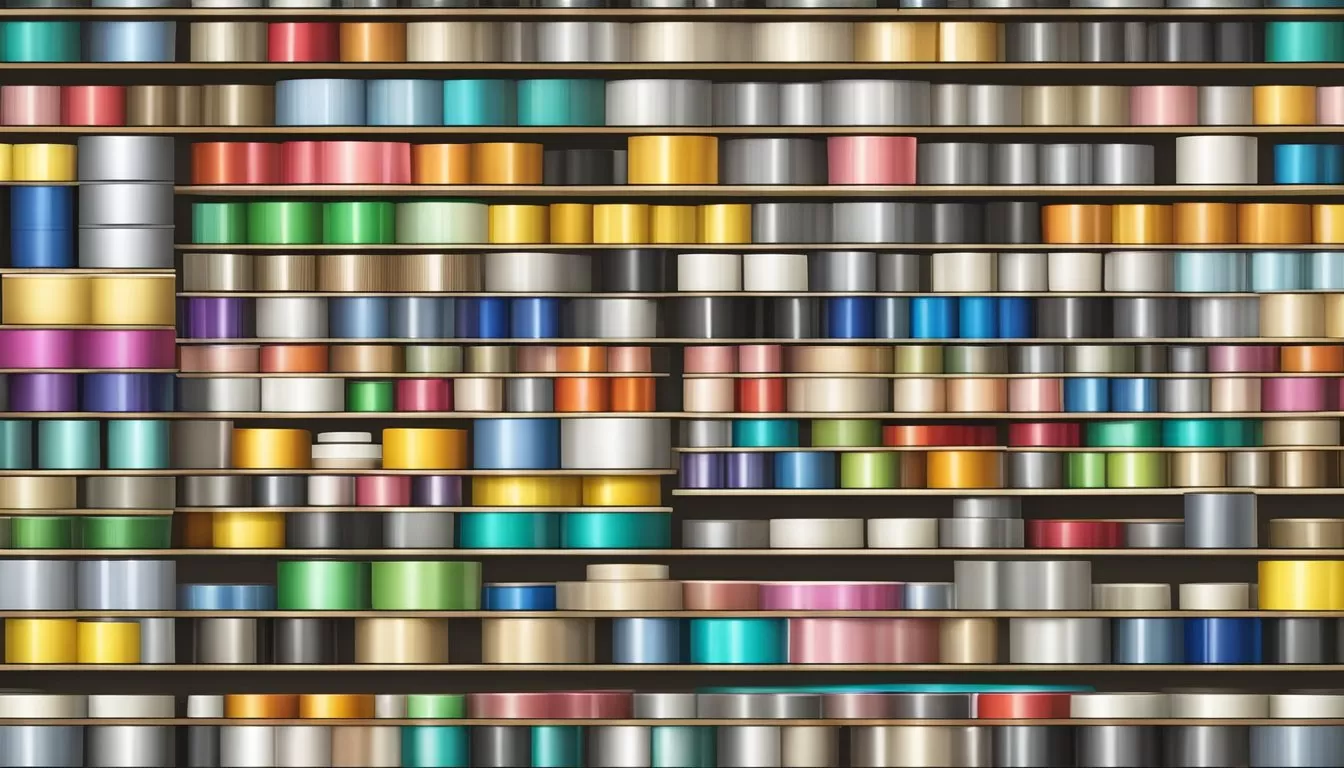
1. The Structural Anatomy: Mesh Count and Substrate Composition
The performance of any fabric-backed adhesive begins with the carrier substrate. Unlike films or paper backings, woven textiles introduce multidirectional mechanical properties. The structural integrity of these materials is governed by two primary factors: fiber composition and mesh count.
Fiber Materials: Cotton, Polyester, and Blends
The yarn used in the weaving process determines the tensile strength, flexibility, and hand-tearability of the tape. 100% cotton threads offer excellent conformability and clean tearing along both the warp (longitudinal) and weft (transverse) directions. However, cotton is susceptible to moisture absorption if not properly laminated. Polyester fibers, or poly-cotton blends, offer superior tensile strength and resistance to chemicals, making them more suitable for harsh manufacturing environments where exposure to solvents or hydrocarbons is common.
Understanding Mesh Count
Mesh count refers to the number of threads per square inch in both the vertical and horizontal directions. The mechanical performance of cloth tape is heavily dependent on this metric:
Low Mesh (27 to 35 Mesh): Highly economical, easy to tear by hand, but possesses lower tensile strength. Best suited for basic bundling, non-critical sealing, and light packaging.
Medium Mesh (40 to 60 Mesh): Provides a balanced performance profile, offering moderate tensile strength and adequate conformability for irregular surfaces.
High Mesh (70 to 80+ Mesh): Offers exceptional tensile strength and resistance to abrasion. These high-density weaves are used in heavy-duty rigging, pipe sealing, and aerospace applications where mechanical failure is not permissible. High mesh counts also provide a smoother surface for lamination, resulting in a more uniform adhesive coat.
2. Adhesive Chemistry and Shear Resistance
The substrate provides the physical strength, but the adhesive formulation dictates the bonding effectiveness under dynamic loads. Industrial applications typically utilize two primary categories of pressure-sensitive adhesives (PSAs): natural rubber and synthetic hot-melt elastomers.
Natural Rubber-Based Adhesives
Natural rubber formulations are highly valued for their immediate wet-out (the speed at which the adhesive flows to cover the substrate surface) and high initial tack. They form strong bonds with a wide variety of surfaces, including low-surface-energy plastics, rough concrete, and oxidized metals. Furthermore, natural rubber maintains its viscoelastic properties across a wider temperature range compared to standard hot-melt adhesives, preventing slippage in cold storage or high-heat environments.
Synthetic Hot-Melt Adhesives
Synthetic thermoplastic block copolymers (such as Styrene-Isoprene-Styrene or SIS) offer excellent shear resistance—the ability of the adhesive to resist sliding forces along the plane of the bond. Hot-melt systems are highly cost-efficient and provide excellent moisture resistance, though they may experience thermoplastic softening under sustained elevated temperatures.
Cohesive Strength and Residue Prevention
A major pain point in B2B operations is adhesive transfer—the residue left behind when tape is peeled away. This occurs when the adhesive's internal cohesive strength is lower than its adhesion to the substrate. High-end manufacturing processes utilize cross-linking agents within the rubber matrix to bolster cohesive strength, ensuring clean, residue-free removal even after exposure to heat and UV radiation.
3. Mitigating Core Industrial Procurement Pain Points
Procurement teams often face unexpected cost overruns due to adhesive failure, material degradation, or application inefficiency. Choosing a high-grade cloth tape from experienced manufacturers prevents these issues before they impact the bottom line.
Addressing Environmental Degradation
Unprotected fabric backings absorb moisture, leading to rot, mildew, and adhesive delamination. To prevent this, industrial tape backing is laminated with a polyethylene (PE) film. This extrusion-lamination process creates a water-impermeable barrier. In outdoor construction or shipping environments, UV radiation can rapidly degrade both the PE backing and the underlying adhesive. Sourcing tapes formulated with UV inhibitors prevents embrittlement and ensures long-term outdoor stability.
Ensuring Consistent Unwind Tension
In automated assembly lines or rapid manual operations, inconsistent unwind force can cause mechanical jams or worker fatigue. If the tape is too difficult to pull off the roll, it can stretch the backing, leading to dimensional instability and subsequent peeling. Youyi addresses this by controlling the curing process and applying precise release coatings to the non-adhesive side of the backing, ensuring smooth, uniform tension from the first turn to the core.
4. Application Engineering Across Key Sectors
The versatility of woven-backed adhesives allows them to serve multiple specialized roles across various industry verticals. Understanding these use cases helps procurement officers match material specifications to operational demands.
HVAC and Ductwork Sealing
In heating, ventilation, and air conditioning installations, maintaining airtight seals is crucial for energy efficiency. When evaluating cloth tape for industrial pipelines, engineers prioritize flame retardancy, low VOC emissions, and long-term shear resistance under thermal cycling. The tape must withstand constant temperature fluctuations without drying out or cracking.
Automotive and Aerospace Wire Harnessing
The automotive assembly sector requires high-performance materials for bundling electrical harnesses. Here, fabric tapes provide not only insulation but also noise suppression (anti-rattle properties) and abrasion resistance against metal chassis edges. These tapes must meet stringent OEM chemical resistance standards to withstand engine fluids and oils.
Entertainment, Staging, and Convention Logistics
The audio-visual and staging industries require non-reflective matte backings (commonly known as gaffer tape) to prevent light glare under high-power stage illumination. Crucially, these tapes must support heavy cables while guaranteeing zero adhesive transfer to expensive equipment or venue floors upon removal.
5. Quantifiable Performance Standards for Quality Assurance
To ensure consistency across high-volume production runs, procurement specialists must rely on standardized testing protocols rather than subjective marketing descriptions. Key metrics to verify in manufacturer data sheets include:
Peel Adhesion (ASTM D3330 / PSTC-101): Measures the force required to remove the tape from a standard stainless-steel plate at a specific angle (usually 180 degrees) and speed. Expressed in Newtons per 25mm or ounces per inch.
Tensile Strength (ASTM D3759 / PSTC-131): Indicates the maximum load the tape can withstand before snapping. This is critical for heavy bundling and structural reinforcement applications.
Elongation at Break: The percentage of stretch achieved before mechanical failure. Low elongation (typically under 10% for high-mesh fabrics) indicates high dimensional stability.
Shear Adhesion (ASTM D3654 / PSTC-107): Measures the holding power of the adhesive under static load over time. This metric is a primary indicator of whether a tape will slip under continuous gravitational pull.
Technical Inquiry and Custom Procurement
Industrial applications present unique environmental and mechanical demands that generic off-the-shelf adhesives cannot satisfy. Sourcing high-performance materials requires direct communication with engineering and manufacturing specialists who can tailor formulations to your exact needs.
Whether your operations require specific tensile tolerances, tailored adhesive coat weights, flame-retardant properties, or custom roll dimensions, working with a vertically integrated manufacturer ensures consistent quality control and bulk pricing efficiency. To discuss your project specifications or request custom formulations of cloth tape to match your production standards, please contact the Youyi engineering team to receive comprehensive product data sheets and physical evaluation samples.
Frequently Asked Questions
Q1: What is the difference between standard duct tape and heavy-duty cloth tape?
A1: Standard utility duct tape typically uses a low mesh count (often 20 to 30 mesh) and a thinner layer of hot-melt adhesive, designed for short-term, general-purpose household fixes. Heavy-duty cloth tape features high-density woven substrates (60 to 80 mesh), superior fiber quality (such as polyester blends), and premium natural rubber adhesives engineered to withstand shear stress, high temperatures, and outdoor exposure without leaving residue.
Q2: Why does adhesive transfer occur, and how can it be prevented?
A2: Adhesive transfer occurs when the cohesive bond within the adhesive compound is weaker than the adhesive bond to the application surface. This is common when tapes are exposed to high heat, UV radiation, or solvents. It is prevented by selecting tapes with cross-linked polymer adhesive formulations, which maintain high internal cohesion and release cleanly from surfaces.
Q3: Can cloth-backed tapes be used in high-temperature applications?
A3: Yes, but performance depends on the adhesive chemistry. While standard hot-melt adhesives may soften above 60°C (140°F), specialized natural rubber-based formulations can maintain structural integrity at continuous temperatures up to 93°C (200°F) or even higher for short periods. Always consult the manufacturer's specification sheet for the exact thermal limits of the adhesive matrix.
Q4: How does mesh count affect hand-tearability during rapid manual application?
A4: A higher mesh count increases the longitudinal tensile strength of the tape, making it highly resistant to breaking under tension. However, because the threads are woven in a precise grid pattern, even high-mesh tapes can be easily and cleanly torn by hand across the width (weft direction), provided the weave is uniform and the PE lamination is thin enough to allow propagation of the tear.
Q5: What is the storage shelf life of industrial fabric-backed tapes?
A5: Under ideal storage conditions (typically 21°C or 70°F, and 50% relative humidity, out of direct sunlight), industrial fabric-backed tapes have a recommended shelf life of 12 to 24 months. Proper storage prevents the natural rubber adhesive from oxidizing or drying out, ensuring that the tack and shear properties remain within nominal limits upon application.